Gutscheinbedingungen

*Gültig bis 07.06.2026 auf (fast) alles. Ausgeschlossen sind Smartboxen, Zeitschriften, Tickets, Lebensmittel, Gaming-Elektroartikel, Tinte/Toner, Gutscheine, Geschenkkarten, Blumen und Abos | Einlösbar in allen Buchhandlungen von Orell Füssli, Barth Bücher, Buchladen Rapunzel, Schuler Orell Füssli, Stauffacher und ZAP unter Vorweisung des Gutscheins, auf www.orellfüssli.ch durch Eingabe des Gutscheincodes. Beim Service „eBooks verschenken“ und bei eBook-Käufen via eReader nicht einlösbar | Mindesteinkaufswert: Fr. 100.- | Nicht mit anderen Rabatten kumulierbar.

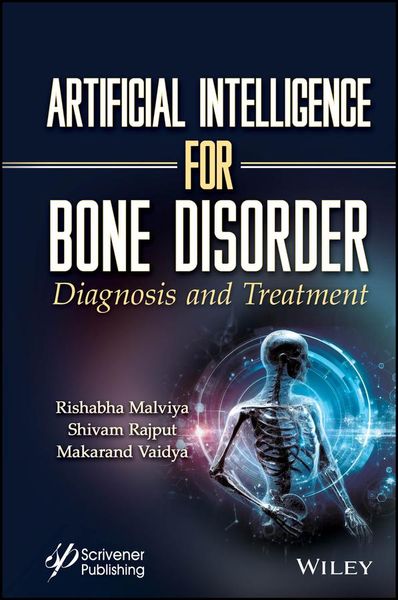
Produktbild: Artificial Intelligence for Bone Disorder

Artificial Intelligence for Bone Disorder Diagnosis and Treatment

Fr. 263.00

inkl. gesetzl. MwSt., Versandkostenfrei


Beschreibung

Produktdetails

Einband

Gebundene Ausgabe

Erscheinungsdatum

21.02.2024

Verlag

Wiley

Seitenzahl

272

Maße (L/B/H)

23.8/15.9/2.2 cm

Gewicht

694 g

Auflage

1. Auflage

Sprache

Englisch

ISBN

978-1-394-23088-4

Beschreibung

Produktdetails

Einband

Gebundene Ausgabe

Erscheinungsdatum

21.02.2024

Verlag

Wiley

Seitenzahl

272

Maße (L/B/H)

23.8/15.9/2.2 cm

Gewicht

694 g

Auflage

1. Auflage

Sprache

Englisch

ISBN

978-1-394-23088-4

Herstelleradresse

Libri GmbH
Europaallee 1
36244 Bad Hersfeld
DE

Email: Libri GmbH

Kundinnen und Kunden meinen

0 Bewertungen

Informationen zu Bewertungen

Zur Abgabe einer Bewertung ist eine Anmeldung im Konto notwendig. Die Authentizität der Bewertungen wird von uns nicht überprüft. Wir behalten uns vor, Bewertungstexte, die unseren Richtlinien widersprechen, entsprechend zu kürzen oder zu löschen.

Die Bewertungen sind nach Format, Anzahl Sterne und Datum sortiert.

Verfassen Sie die erste Bewertung zu diesem Artikel

Helfen Sie anderen Kund*innen durch Ihre Meinung

Kundinnen und Kunden meinen

0 Bewertungen filtern

Die Leseprobe wird geladen.
  • Produktbild: Artificial Intelligence for Bone Disorder
  • Foreword xi

    Preface xiii

    1 Artificial Intelligence and Bone Fracture Detection: An Unexpected Alliance 1

    1.1 Introduction 1

    1.2 Bone Fracture 3

    1.3 Deep Learning and Its Significance in Radiology 4

    1.4 Role of AI in Bone Fracture Detection and Its Application 6

    1.5 Primary Machine Learning-Based Algorithm in Bone Fracture Detection 9

    1.6 Deep Learning-Based Techniques for Fracture Detection 13

    1.7 Conclusion 18

    2 Integrating AI With Tissue Engineering: The Next Step in Bone Regeneration 25

    2.1 Introduction 25

    2.2 Anatomy and Biology of Bone 26

    2.3 Bone Regeneration Mechanism 28

    2.4 Understanding AI 35

    2.5 Current AI Integration 39

    2.6 Applying Deep Learning 42

    2.7 Conclusion 46

    3 Deep Supervised Learning on Radiological Images to Classify Bone Fractures: A Novel Approach 59

    3.1 Introduction 59

    3.2 Common Bone Disorder 62

    3.3 Deep Supervised Learning's Importance in Orthopedics and Radiology 63

    3.4 Perspective From the Past 63

    3.5 Essential Deep Learning Methods for Bone Imaging 65

    3.6 Strategies for Effective Annotation 69

    3.7 Application of Deep Learning to the Detection of Fractures 69

    3.8 Conclusion 73

    4 Treatment of Osteoporosis and the Use of Digital Health Intervention 79

    4.1 Introduction 79

    4.2 Opportunistic Diagnosis of Osteoporosis 82

    4.3 Predictive Models 85

    4.4 Assessment of Fracture Risk and Osteoporosis Diagnosis by Digital Health 90

    4.5 Clinical Decision Support Tools, Reminders, and Prompts for Spotting Osteoporosis in Digital Health Settings 91

    4.6 The Role of Digital Health in Facilitating Patient Education, Decision, and Conversation 93

    4.7 Conclusion 95

    5 Utilizing AI to Improve Orthopedic Care 105

    5.1 Introduction 105

    5.2 What is AI? 106

    5.3 Introduction to Machine Learning: Algorithms and Applications 109

    5.4 Natural Language Processing 114

    5.5 The Internet of Things 115

    5.6 Prospective AI Advantages in Orthopedics 116

    5.7 Diagnostic Application of AI 118

    5.8 Prediction Application With AI 121

    5.9 Conclusion 124

    6 Significance of Artificial Intelligence in Spinal Disorder Treatment 133

    6.1 Introduction 133

    6.2 Machine Learning 135

    6.3 Methods Derived From Statistics 137

    6.4 Applications of Machine Learning in Spine Surgery 143

    6.5 Application of AI and ML in Spine Research 147

    6.6 Conclusion 156

    7 Osteoporosis Biomarker Identification and Use of Machine Learning in Osteoporosis Treatment 169

    7.1 Introduction 169

    7.2 Biomarkers of Bone Development 172

    7.3 Biomarkers for Bone Resorption 175

    7.4 Regulators of Bone Turnover 179

    7.5 Methods to Identify Osteoporosis 180

    7.6 Conclusion 187

    8 The Role of AI in Pediatric Orthopedics 197

    8.1 Introduction 197

    8.2 Strategy Based on Artificial Intelligence 200

    8.3 Several Applications of Artificial Intelligence 207

    8.4 Conclusion 212

    9 Use of Artificial Intelligence in Imaging for Bone Cancer 219

    9.1 Introduction 219

    9.2 Applications of Machine Learning to Cancer Diagnosis 223

    9.3 Artificial Intelligence Methods for Diagnosing Bone Cancer 226

    9.4 Methodologies for Constructing Deep Learning Model 227

    9.5 Clinical Image Applications of Deep Learning for Bone Tumors 229

    9.6 Conclusion 236

    References 236

    Index 245