Beschreibung
Produktdetails
Format
ePUB
Kopierschutz
Nein
Family Sharing
Nein
Text-to-Speech
Ja
Erscheinungsdatum
05.09.2023
Verlag
De GruyterSeitenzahl
258 (Printausgabe)
Dateigröße
1509 KB
Auflage
1. Auflage
Übersetzt von
Jeanne Haizhen Allen
Sprache
Englisch
EAN
9783110986235
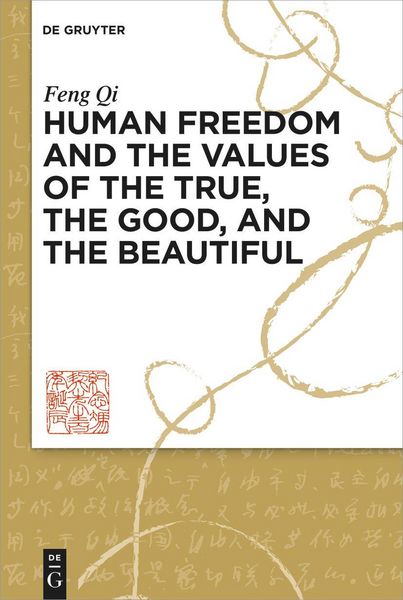
This is a philosophical book about the idea of human freedom in the context of Chinese philosophy on truth, the good, and beauty. The book shows that there is a coherent and sophisticated philosophical discourse on human freedom throughout the history of Chinese Philosophy in aesthetics, ethics, and epistemology. Feng Qi discusses the development of freedom in light of the Marxist theory of practice.
In the history of philosophy, the relation between thought and existence, which is fundamental to philosophy, has stimulated many debates. These debates, though they have assumed diverse forms in Chinese and Western philosophy, have eventually concentrated on three inquiries: the natural world (the objective material world); the human mind; and the concepts, categories, and laws that are representative forms of nature in the human mind and in knowledge. In Chinese philosophy, the three inquiries are summarized using three notions: qi (¿ breath, spirit), xin (¿ heart), dao (¿ the Way). What relationship do the three notions have with each other? This book explores the way to human freedom through the divergent paths in Chinese philosophy.
This book's investigation of human activities brings the typical Chinese philosophical discourse from the cosmological realm into the realm of human beings as individuals. In this regard, the three inquiries can be described as being about real life, ideals, and individuals.
In the history of philosophy, the relation between thought and existence, which is fundamental to philosophy, has stimulated many debates. These debates, though they have assumed diverse forms in Chinese and Western philosophy, have eventually concentrated on three inquiries: the natural world (the objective material world); the human mind; and the concepts, categories, and laws that are representative forms of nature in the human mind and in knowledge. In Chinese philosophy, the three inquiries are summarized using three notions: qi (¿ breath, spirit), xin (¿ heart), dao (¿ the Way). What relationship do the three notions have with each other? This book explores the way to human freedom through the divergent paths in Chinese philosophy.
This book's investigation of human activities brings the typical Chinese philosophical discourse from the cosmological realm into the realm of human beings as individuals. In this regard, the three inquiries can be described as being about real life, ideals, and individuals.
Kundinnen und Kunden meinen
Verfassen Sie die erste Bewertung zu diesem Artikel
Helfen Sie anderen Kund*innen durch Ihre Meinung