Beschreibung
Produktdetails
Format
ePUB
Kopierschutz
Nein
Family Sharing
Ja
Text-to-Speech
Ja
Altersempfehlung
ab 18 Jahr(e)
Erscheinungsdatum
06.07.2023
Verlag
PasserinoSeitenzahl
(Printausgabe)
Dateigröße
1117 KB
Sprache
Englisch
EAN
9791222423883
The Knights Templar were a medieval Christian military order that existed from the early 12th century until the early 14th century. They were initially formed to protect Christian pilgrims traveling to the Holy Land during the time of the Crusades. The order quickly grew in power and wealth, establishing a vast network of castles, estates, and financial infrastructure throughout Europe and the Middle East.
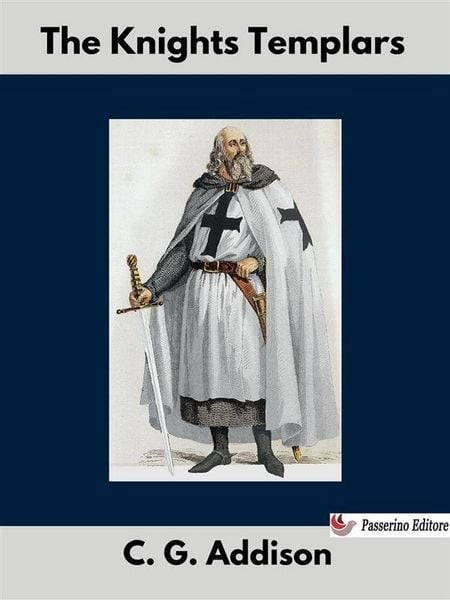
The Templars were recognized as a distinctive organization by the Pope in 1129 and were granted special privileges, including exemption from taxes and authority only to the Pope. They adopted a distinctive white mantle adorned with a red cross, which became their iconic symbol. The Templars followed a strict code of conduct and lived a monastic lifestyle, taking vows of poverty, chastity, and obedience.
The order became known for their military prowess and their financial and logistical abilities. They established a banking system that allowed pilgrims and crusaders to deposit money in one location and withdraw it in another, which helped to fund the Crusades. The Templars also developed an early form of international banking, becoming a trusted institution for financial transactions.
However, the order's power and wealth eventually attracted suspicion and envy. Rumors and accusations of heresy, corruption, and secrecy began to circulate. In 1307, King Philip IV of France, heavily indebted to the Templars, ordered the arrest of the order's members and the seizure of their assets. The Templars were accused of various crimes, including heresy and idolatry.
Under pressure from King Philip IV, Pope Clement V disbanded the order in 1312. Many Templars were arrested, tortured, and forced to confess to various charges. Some Templars managed to escape and went underground, while others were imprisoned or executed. The last Grand Master of the Templars, Jacques de Molay, was burned at the stake in 1314.
The Templars' legacy has endured throughout history, capturing the imagination and giving rise to numerous legends and conspiracy theories. Some modern organizations and societies claim to be the descendants or successors of the original Templar order, but these claims are largely speculative and lack historical evidence.
Today, the Knights Templar are primarily known for their role in the Crusades, their military and financial expertise, and the mystery and intrigue surrounding their downfall. They remain an important part of medieval history and continue to fascinate scholars and enthusiasts alike.
The Templars were recognized as a distinctive organization by the Pope in 1129 and were granted special privileges, including exemption from taxes and authority only to the Pope. They adopted a distinctive white mantle adorned with a red cross, which became their iconic symbol. The Templars followed a strict code of conduct and lived a monastic lifestyle, taking vows of poverty, chastity, and obedience.
The order became known for their military prowess and their financial and logistical abilities. They established a banking system that allowed pilgrims and crusaders to deposit money in one location and withdraw it in another, which helped to fund the Crusades. The Templars also developed an early form of international banking, becoming a trusted institution for financial transactions.
However, the order's power and wealth eventually attracted suspicion and envy. Rumors and accusations of heresy, corruption, and secrecy began to circulate. In 1307, King Philip IV of France, heavily indebted to the Templars, ordered the arrest of the order's members and the seizure of their assets. The Templars were accused of various crimes, including heresy and idolatry.
Under pressure from King Philip IV, Pope Clement V disbanded the order in 1312. Many Templars were arrested, tortured, and forced to confess to various charges. Some Templars managed to escape and went underground, while others were imprisoned or executed. The last Grand Master of the Templars, Jacques de Molay, was burned at the stake in 1314.
The Templars' legacy has endured throughout history, capturing the imagination and giving rise to numerous legends and conspiracy theories. Some modern organizations and societies claim to be the descendants or successors of the original Templar order, but these claims are largely speculative and lack historical evidence.
Today, the Knights Templar are primarily known for their role in the Crusades, their military and financial expertise, and the mystery and intrigue surrounding their downfall. They remain an important part of medieval history and continue to fascinate scholars and enthusiasts alike.
Kundinnen und Kunden meinen
Verfassen Sie die erste Bewertung zu diesem Artikel
Helfen Sie anderen Kund*innen durch Ihre Meinung