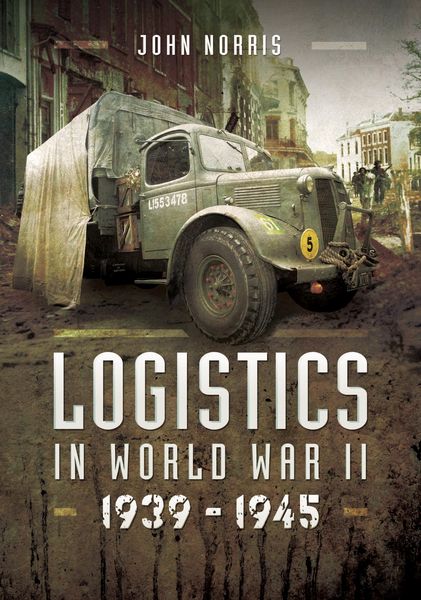
Logistics in World War II
Fr. 11.90
inkl. gesetzl. MwSt.Beschreibung
Produktdetails
Format
ePUB
Kopierschutz
Ja
Family Sharing
Ja
Text-to-Speech
Ja
Erscheinungsdatum
30.04.2020
Verlag
Pen and Sword MilitarySeitenzahl
464 (Printausgabe)
Dateigröße
155494 KB
Sprache
Englisch
EAN
9781473859142
A history of the Second World War with a focus on supply, transport, and other crucial operations-includes photos.
Logistics, though less dramatic or glamorous than other aspects of war, nevertheless play a decisive role in the outcome of campaigns and battles. This book focuses on the role of logistics in World War II, marshaling some astounding facts and figures to convey the sheer scale of the task all belligerents faced to equip vast forces and supply them in the field.
Military historian John Norris also draws on firsthand accounts to illustrate what this meant for the men and women in the logistics chain and those depending on it at the sharp end. Many of the vehicles, from supply trucks to pack mules, and other relevant hardware are discussed and illustrated with numerous photographs. Numerous topics are covered-for example, how Hitler's panzer divisions were kept rolling in the Blitzkrieg (a German division in 1940 still had around five thousand horses, requiring hundreds of tons of fodder) and the British army's disastrous loss of equipment at Dunkirk. This is a fascinating and valuable study of a neglected aspect of World War II.
Logistics, though less dramatic or glamorous than other aspects of war, nevertheless play a decisive role in the outcome of campaigns and battles. This book focuses on the role of logistics in World War II, marshaling some astounding facts and figures to convey the sheer scale of the task all belligerents faced to equip vast forces and supply them in the field.
Military historian John Norris also draws on firsthand accounts to illustrate what this meant for the men and women in the logistics chain and those depending on it at the sharp end. Many of the vehicles, from supply trucks to pack mules, and other relevant hardware are discussed and illustrated with numerous photographs. Numerous topics are covered-for example, how Hitler's panzer divisions were kept rolling in the Blitzkrieg (a German division in 1940 still had around five thousand horses, requiring hundreds of tons of fodder) and the British army's disastrous loss of equipment at Dunkirk. This is a fascinating and valuable study of a neglected aspect of World War II.
Kundinnen und Kunden meinen
Verfassen Sie die erste Bewertung zu diesem Artikel
Helfen Sie anderen Kund*innen durch Ihre Meinung