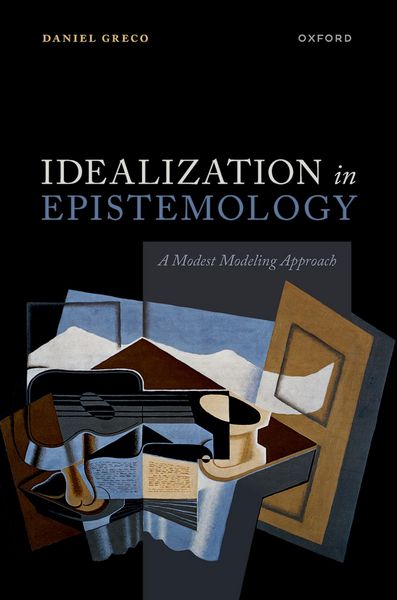
Idealization in Epistemology A Modest Modeling Approach
-
Form:Einzelkauf Download
-
Sprache:Englisch
-
eBook Format:PDF
- PDF Fr. 64.90 ausgewählt
- ePUB Fr. 64.90
Fr. 64.90
inkl. gesetzl. MwSt.Beschreibung
Produktdetails
Format
Kopierschutz
Ja
Family Sharing
Nein
Text-to-Speech
Nein
Erscheinungsdatum
19.07.2023
Verlag
OUP eBookSeitenzahl
208 (Printausgabe)
Dateigröße
2011 KB
Sprache
Englisch
EAN
9780192604620
It's standard in epistemology to approach questions about knowledge and rational belief using idealized, simplified models. But while the practice of constructing idealized models in epistemology is old, metaepistemological reflection on that practice is not. Greco argues that the fact that epistemologists build idealized models isn't merely a metaepistemological observation that can leave first-order epistemological debates untouched. Rather, once we view epistemology through the lens of idealization and model-building, the landscape looks quite different.
Constructing idealized models is likely the best epistemologists can do. Once one starts using epistemological categories like belief, knowledge, and confidence, the realm of idealization and model-building is entered. We can object to a model of knowledge by pointing to a better model, but in the absence of a better model, the fact that a framework for epistemologizing theorizing involves simplifications, approximations, and other inaccuracies-the fact of its status as an idealized model-is not in itself objectionable.
Once we accept that theorizing in epistemological terms is inescapably idealized, a number of intriguing possibilities open up. Greco defends a package of epistemological views that might otherwise have looked indefensibly dismissive of our cognitive limitations-a package according to which we know a wide variety of facts with certainty, including what our evidence is, what we know and don't know, and what follows from our knowledge.
Constructing idealized models is likely the best epistemologists can do. Once one starts using epistemological categories like belief, knowledge, and confidence, the realm of idealization and model-building is entered. We can object to a model of knowledge by pointing to a better model, but in the absence of a better model, the fact that a framework for epistemologizing theorizing involves simplifications, approximations, and other inaccuracies-the fact of its status as an idealized model-is not in itself objectionable.
Once we accept that theorizing in epistemological terms is inescapably idealized, a number of intriguing possibilities open up. Greco defends a package of epistemological views that might otherwise have looked indefensibly dismissive of our cognitive limitations-a package according to which we know a wide variety of facts with certainty, including what our evidence is, what we know and don't know, and what follows from our knowledge.
Kundinnen und Kunden meinen
Verfassen Sie die erste Bewertung zu diesem Artikel
Helfen Sie anderen Kund*innen durch Ihre Meinung