Gutscheinbedingungen

*Gültig bis 07.06.2026 auf (fast) alles. Ausgeschlossen sind Smartboxen, Zeitschriften, Tickets, Lebensmittel, Gaming-Elektroartikel, Tinte/Toner, Gutscheine, Geschenkkarten, Blumen und Abos | Einlösbar in allen Buchhandlungen von Orell Füssli, Barth Bücher, Buchladen Rapunzel, Schuler Orell Füssli, Stauffacher und ZAP unter Vorweisung des Gutscheins, auf www.orellfüssli.ch durch Eingabe des Gutscheincodes. Beim Service „eBooks verschenken“ und bei eBook-Käufen via eReader nicht einlösbar | Mindesteinkaufswert: Fr. 100.- | Nicht mit anderen Rabatten kumulierbar.

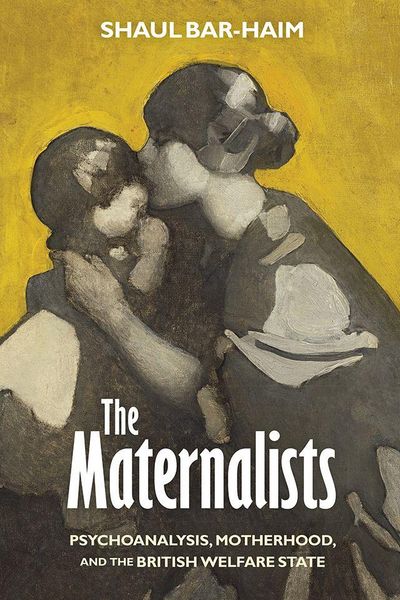
Produktbild: The Maternalists

The Maternalists Psychoanalysis, Motherhood, and the British Welfare State

Fr. 47.90

inkl. gesetzl. MwSt., Versandkostenfrei


Beschreibung

Produktdetails

Einband

Taschenbuch

Erscheinungsdatum

28.05.2024

Verlag

University Of Pennsylvania Press

Seitenzahl

304

Maße (L/B/H)

22.9/15.2/1.7 cm

Gewicht

436 g

Sprache

Englisch

ISBN

978-1-5128-2605-0

Beschreibung

Rezension

"[The] 'maternal turn' in interwar psychoanalytic discourse in Britain, which was at the same time a turn from Freud to Klein, and its impact on postwar welfare policy, is the subject of Shaul Bar-Haim's book. He argues that progressive 'maternalistic' thinkers from the interwar period involved in education, anthropology and the 'psy' professions connected new psychoanalytic ideas of motherhood to an ideal of the state as a maternal entity. The 'maternal ethics' of the period were a response to the horrors of the First World War and the emergence of fascism on the continent. In this figuration, motherhood is less a lived experience than a site of collective imaginings, a meeting point between private and public spaces. As Bar-Haim argues, women and mothers were the main intermediaries between the family and the state in its newly interventionist mode, through their encounters with GPs, social workers, psychotherapists and teachers." (London Review of Books) "Bar-Haim sets out to demonstrate how much of what we think of as democracy was forged in conjunction with a cultural shift to valuing mothers. The book brings together several strands of existing historiography, such as the development of a relations-based psychoanalysis from Freud's drive-based model, the emergence of the mother figure within this new psychoanalysis, and the synergy between the new psychoanalysis and the welfare state...[T]he book's contribution is impressive. Deploying a multiplicity of primary and secondary sources, some of them archival and unpublished, Bar-Haim presents a compelling account of a historical transformation in the consequences of which we all live. While surveying sources from various disciplines, he avoids both jargon and oversimplification: the essay remains nuanced and accessible throughout. And in a scholarly world that rewards a specialization-to-naught strategy, Bar-Haim's opting for a broad lens is courageous." (The History of the Behavioral Sciences) "The Maternalists, in which Shaul Bar-Haim explores mid-century psychoanalysts' maternalistic thinking and the role of the welfare state, joins bookshelves at a moment in which Britain might be seen to be reassessing its enactment of maternalistic, caring values...[A]n intriguing, elegant, and deeply researched contribution to our understanding of the imaginaries of the welfare state and the influence of psychanalytic models in the mid-twentieth century." (Twentieth-Century British History) "The Maternalists provides at once a highly original interpretation of key figures in post-Freudian psychoanalysis and a novel take on the ideas that animated the expansion and reformation of the British welfare state. In focusing on the efforts to 'maternalize' the state-indeed to 'maternalize' society as a whole-Shaul Bar-Haim fundamentally rewrites the story we thought we knew. But the book achieves yet more, as it returns to the once tightly intertwined evolutions of psychoanalysis and anthropology, and recovers indispensable, heretofore underappreciated anticolonial strands within the psychoanalytic tradition." (Dagmar Herzog, author of Unlearning Eugenics) "This is a fascinating and important book. Shaul Bar-Haim plumbs a variety of continental and British psychoanalytic thinkers, from Freud and Ferenczi to Winnicott and Balint, to illuminate the ways in which they helped shape the postwar welfare state with its decidedly maternal cast. The Maternalists is a riveting contribution both to our understanding of the social influence of psychoanalytic thought and the meanings of the welfare state." (Lisa Appignanesi, author of Mad, Bad, and Sad)

Produktdetails

Einband

Taschenbuch

Erscheinungsdatum

28.05.2024

Verlag

University Of Pennsylvania Press

Seitenzahl

304

Maße (L/B/H)

22.9/15.2/1.7 cm

Gewicht

436 g

Sprache

Englisch

ISBN

978-1-5128-2605-0

Herstelleradresse

Libri GmbH
Europaallee 1
36244 Bad Hersfeld
DE

Email: gpsr@libri.de

Kundinnen und Kunden meinen

0 Bewertungen

Informationen zu Bewertungen

Zur Abgabe einer Bewertung ist eine Anmeldung im Konto notwendig. Die Authentizität der Bewertungen wird von uns nicht überprüft. Wir behalten uns vor, Bewertungstexte, die unseren Richtlinien widersprechen, entsprechend zu kürzen oder zu löschen.

Die Bewertungen sind nach Format, Anzahl Sterne und Datum sortiert.

Verfassen Sie die erste Bewertung zu diesem Artikel

Helfen Sie anderen Kund*innen durch Ihre Meinung

Kundinnen und Kunden meinen

0 Bewertungen filtern

Die Leseprobe wird geladen.
  • Produktbild: The Maternalists
  • Introduction
    Chapter 1. The "Sphincter-Morality" and Beyond: The Concept of Childhood in Interwar Psychoanalysis
    Chapter 2. How Children Think: Susan Isaacs on "Primitive" Thinking
    Chapter 3. Malinowski, Róheim, and the Maternal Shift in British Psychoanalysis and Anthropology
    Chapter 4. Imagining the "Maternal" Past: Ian Suttie's Critique of Oedipal Culture
    Chapter 5. What About Father? Civic-Republican Maternalism and the Welfare State
    Chapter 6. "The Drug 'Doctor'": The Balint Movement and Psychosocial Medicine in Postwar Britain
    Conclusion
    Note
    Bibliography
    Index
    Acknowledgments