Gutscheinbedingungen

*Gültig bis 07.06.2026 auf (fast) alles. Ausgeschlossen sind Smartboxen, Zeitschriften, Tickets, Lebensmittel, Gaming-Elektroartikel, Tinte/Toner, Gutscheine, Geschenkkarten, Blumen und Abos | Einlösbar in allen Buchhandlungen von Orell Füssli, Barth Bücher, Buchladen Rapunzel, Schuler Orell Füssli, Stauffacher und ZAP unter Vorweisung des Gutscheins, auf www.orellfüssli.ch durch Eingabe des Gutscheincodes. Beim Service „eBooks verschenken“ und bei eBook-Käufen via eReader nicht einlösbar | Mindesteinkaufswert: Fr. 100.- | Nicht mit anderen Rabatten kumulierbar.

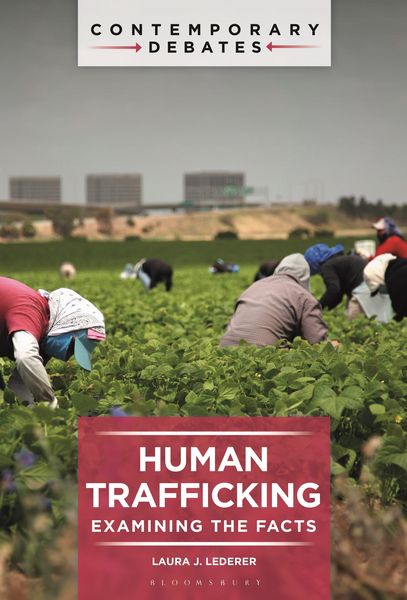
Produktbild: Human Trafficking

Human Trafficking Examining the Facts

Fr. 93.90

inkl. gesetzl. MwSt., Versandkostenfrei


Beschreibung

Produktdetails

Einband

Gebundene Ausgabe

Erscheinungsdatum

22.02.2024

Verlag

Bloomsbury

Seitenzahl

224

Maße (L/B/H)

23.6/15.7/1.8 cm

Gewicht

476 g

Sprache

Englisch

ISBN

978-1-4408-8120-6

Beschreibung

Produktdetails

Einband

Gebundene Ausgabe

Erscheinungsdatum

22.02.2024

Verlag

Bloomsbury

Seitenzahl

224

Maße (L/B/H)

23.6/15.7/1.8 cm

Gewicht

476 g

Sprache

Englisch

ISBN

978-1-4408-8120-6

Herstelleradresse

Libri GmbH
Europaallee 1
36244 Bad Hersfeld
DE

Email: gpsr@libri.de

Kundinnen und Kunden meinen

0 Bewertungen

Informationen zu Bewertungen

Zur Abgabe einer Bewertung ist eine Anmeldung im Konto notwendig. Die Authentizität der Bewertungen wird von uns nicht überprüft. Wir behalten uns vor, Bewertungstexte, die unseren Richtlinien widersprechen, entsprechend zu kürzen oder zu löschen.

Die Bewertungen sind nach Format, Anzahl Sterne und Datum sortiert.

Verfassen Sie die erste Bewertung zu diesem Artikel

Helfen Sie anderen Kund*innen durch Ihre Meinung

Kundinnen und Kunden meinen

0 Bewertungen filtern

  • Produktbild: Human Trafficking
  • How to Use This Book
    Acknowledgements

    Chapter 1. Numbers Never Lie? Estimating the Nature and Scope of Human Trafficking
    Q 1. How many people are trafficked in the United States and around the world?
    Q 2. How widespread is sex and labor trafficking in the United States?
    Q 3. Does labor trafficking occur in the United States?
    Q 4. Is there one internationally recognized method used for estimating human trafficking?
    Q 5. Why do campaigns to end human trafficking feature stories of former trafficking victims?

    Chapter 2. The "3P" Framework: Prosecution, Prevention, Protection and Assistance
    Q 6. What is the Trafficking Victims Protection Act and the 3P Framework?
    Q 7. Partnership: What is the so-called "Fourth P" in the Trafficking Victims Protection Act?
    Q 8. Prosecution: Is law enforcement an important aspect of combating human trafficking?
    Q 9. Protection: Is victim assistance an important part of combating human trafficking?
    Q10. Prevention: Is "moving upstream" the most essential part of stopping human trafficking?

    Chapter 3. Survivors: Language, Image, Life
    Q 11. Victim vs. Survivor: Does the language used in discussions of trafficking matter?
    Q 12. Is survivor-informed, survivor-centered engagement important to anti-trafficking work?
    Q 13. Can images subliminally reinforce misconceptions about human trafficking?
    Q 14. - What barriers do trafficking survivors face to escape and obtain care?
    Q 15. Can trafficking be reduced by targeting buyers?
    Q 16. Has production of electric vehicles been linked to forced labor?

    Chapter 4. Countering Traffic in Persons
    Q 17. Have some anti-trafficking and law enforcement entities been rocked by trafficking scandals?
    Q 18. Is the National Human Trafficking Hotline an effective tool for combating human trafficking?
    Q 19. Are the experiences of trafficking survivors being incorporated into anti-trafficking work?

    Chapter 5. Learning from Lived Experience: What Survivors Are Telling Us
    Q 20. Have researchers found links between trafficking, homelessness, and drug addiction?
    Q 21. What negative health impacts are associated with human trafficking?
    Q 22. Do other forms of human trafficking exist?

    Chapter 6. The Long Arc of Slavery
    Q 23. How long has slavery been in existence?
    Q 24. How did the modern anti-slavery movement develop?

    Bibliography
    Subject Index
    About the Author