• Produktbild: Bringing the English Curriculum to Life
  • Produktbild: Bringing the English Curriculum to Life

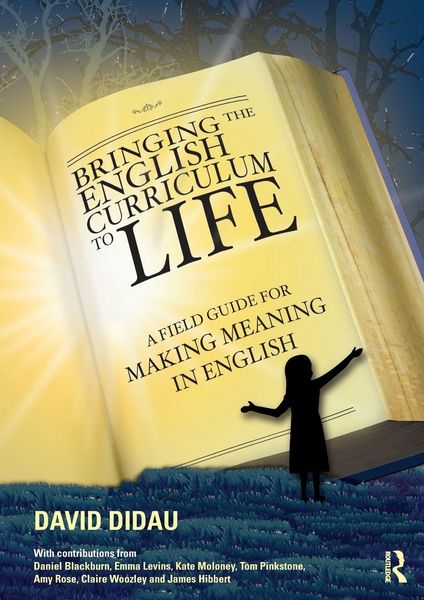
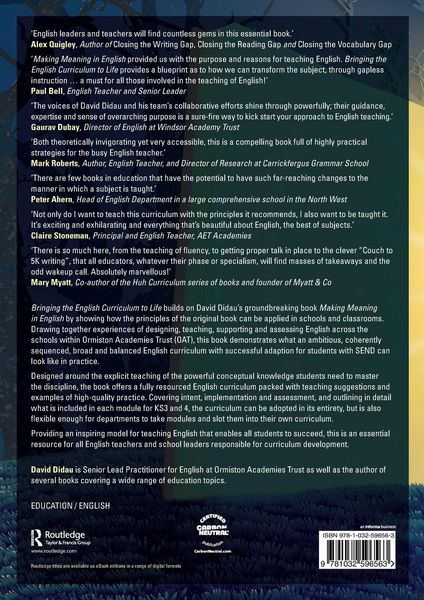
Bringing the English Curriculum to Life A Field Guide for Making Meaning in English

Fr. 51.90

inkl. gesetzl. MwSt., Versandkostenfrei


Beschreibung

Produktdetails

Einband

Taschenbuch

Erscheinungsdatum

12.04.2024

Abbildungen

schwarz-weiss Illustrationen, farbige Illustrationen, Raster, schwarz-weiss, Raster, farbig, Tabellen, schwarz-weiss, Tabellen, farbig

Verlag

Taylor & Francis

Seitenzahl

162

Maße (L/B/H)

29.7/21/0.9 cm

Gewicht

460 g

Sprache

Englisch

ISBN

978-1-03-259656-3

Beschreibung

Produktdetails

Einband

Taschenbuch

Erscheinungsdatum

12.04.2024

Abbildungen

schwarz-weiss Illustrationen, farbige Illustrationen, Raster, schwarz-weiss, Raster, farbig, Tabellen, schwarz-weiss, Tabellen, farbig

Verlag

Taylor & Francis

Seitenzahl

162

Maße (L/B/H)

29.7/21/0.9 cm

Gewicht

460 g

Sprache

Englisch

ISBN

978-1-03-259656-3

Herstelleradresse

Produktsicherheitsverantwortliche/r
Europaallee 1
36244 Bad Hersfeld
DE

Email: gpsr@libri.de

Kundinnen und Kunden meinen

0 Bewertungen

Informationen zu Bewertungen

Zur Abgabe einer Bewertung ist eine Anmeldung im Konto notwendig. Die Authentizität der Bewertungen wird von uns nicht überprüft. Wir behalten uns vor, Bewertungstexte, die unseren Richtlinien widersprechen, entsprechend zu kürzen oder zu löschen.

Die Bewertungen sind nach Format, Anzahl Sterne und Datum sortiert.

Verfassen Sie die erste Bewertung zu diesem Artikel

Helfen Sie anderen Kund*innen durch Ihre Meinung

Kundinnen und Kunden meinen

0 Bewertungen filtern

Die Leseprobe wird geladen.
  • Produktbild: Bringing the English Curriculum to Life
  • Produktbild: Bringing the English Curriculum to Life
  • Section 1: Intent: Specifying the curriculum

    1.1 What we mean by ‘intent’

    1.2 Curriculum as conversation

    1.3 The ‘knowledge turn’ in English

    1.4 The problem with thinking of English as ‘skills based’

    1.5 Why do so many students fail to make progress?

    1.6 Specifying curriculum concepts in English

    1.7 Ambitious for all

    1.8 Coherent planning and sequencing

    1.9 Designed for students with SEND

    1.10 Broad and balanced

    1.11 Core and hinterland

    1.12 Personal development

    1.13 GCSE ready

    Intent: key points

    Section 2: Implementation: Communicating the curriculum

    2.1 What we mean by ‘implementation’

    2.2 Gapless instruction

    2.3 Success before struggle

    2.4 Five core pedagogies

    2.5 Mini-white boards

    2.6 Regular retrieval practice

    2.7 Vocabulary instruction

    2.8 Couch to 5k writing

    2.9 Reading for meaning

    2.10 Structured discussion

    2.11 Teaching tenor, vehicle and ground

    2.12 Marking books

    2.13 Homework

    2.14 Using visualisers

    2.15 Student anthologies

    2.16 Teacher guides

    2.17 The importance of co-planning

    2.18 Scaling across multiple schools

    Implementation: key points

    Section 3: Impact: Assessing the curriculum

    3.1 What we mean by ‘impact’

    3.2 Using the curriculum as a progression model

    3.3 The madness of flightpaths

    3.4 The problem with Age Related Expectations

    3.5 Should we grade students?

    3.6 Curriculum Related Expectations

    3.7 What is assessment for?

    3.8 Mastery assessment

    3.9 Problems with assessing English

    3.10 Formative assessment and identifying gaps

    3.11 Hinge point questions

    3.12 The role of numbers

    3.13 Summative assessment and comparative judgement

    3.14 The need for discriminatory assessment

    3.15 Reporting to different audiences

    Impact: key points

    Section 4: The curriculum in detail

    4.1 Year 7 – The origins of literature

    4.2 Year 8 – The development of form

    4.3 Year 9 – Into the world

    4.4 The KS4 curriculum

    4.4.1 Teaching AQA’s Power & Conflict poetry cluster

    4.4.3 A note about GCSE reform