• Produktbild: The Voice of the People?
  • Produktbild: The Voice of the People?

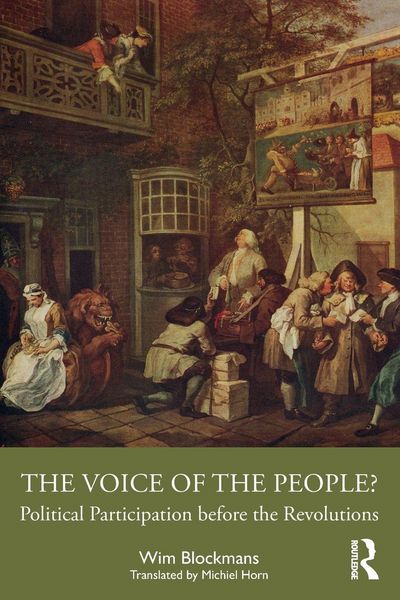
The Voice of the People? Political Participation before the Revolutions

Fr. 73.90

inkl. gesetzl. MwSt., Versandkostenfrei


Beschreibung

Produktdetails

Einband

Taschenbuch

Erscheinungsdatum

31.01.2024

Abbildungen

12 SW-Abb., 12 SW-Fotos

Verlag

Taylor & Francis

Seitenzahl

460

Maße (L/B/H)

23.4/15.6/2.5 cm

Gewicht

693 g

Sprache

Englisch

ISBN

978-1-03-206394-2

Beschreibung

Rezension

'[...] he aims to find an explanation for the way in which political participation has or has not taken shape over the centuries and in different places [the liberal revolutions before and after 1800].'

Produktdetails

Einband

Taschenbuch

Erscheinungsdatum

31.01.2024

Abbildungen

12 SW-Abb., 12 SW-Fotos

Verlag

Taylor & Francis

Seitenzahl

460

Maße (L/B/H)

23.4/15.6/2.5 cm

Gewicht

693 g

Sprache

Englisch

ISBN

978-1-03-206394-2

EU-Ansprechpartner

Taylor & Francis Verlag GmbH
Kaufingerstraße 24
80331 München
DE
GPSR@taylorandfrancis.com

Herstelleradresse

Taylor & Francis Group
5 Howick Place
SW1P 1WG London
UK
GPSR@taylorandfrancis.com

Noch keine Bewertungen vorhanden

Verfassen Sie die erste Bewertung zu diesem Artikel

Helfen Sie anderen Kundinnen und Kunden durch Ihre Meinung.

Kundinnen und Kunden meinen

Bewertungen (0)

Die Leseprobe wird geladen.
  • Produktbild: The Voice of the People?
  • Produktbild: The Voice of the People?
  • 1 Historical roots of political voice

    Voice and representation

    A unique achievement

    Continuity? 9

    The state of research

    Terminology

    Theoretical points of departure

    Political participation today

    This book

    2 The playing field is demarcated: Communities and political landscapes

    Increasing differences in development

    The geographic environment

    The formation of political units from a dominant core

    The imperial obsession

    Alliances of free communities

    Coasts, rivers and land masses

    The political geography

    The playing field

    3 The players: The formation of political communities

    Estates and their representation

    The first estate: the clergy

    The second estate: the nobility

    Peace movements

    Precedence

    Concentration of power

    Counsel and action

    England: the early kingdom

    Dynastic wars, bad kings and rebellious barons

    Balances of power: Catalonia and Aragon

    Dynastic discontinuity

    Castile and León

    Brabant and Castile

    The leading actors

    4 Game changers: The third estate makes itself heard

    The Italian polyarchy

    The astonishing North

    The social composition of the Tuscan population

    The Papal States

    The South

    Balances of power

    Popular sovereignty in Flanders

    Commercial interests

    Peasants' voice

    The common concern for water management in the Low Countries

    Core concepts in the political debate

    The triangular relationship: prince, nobility, cities

    5 Within the lines: Institutionalized political voice

    The vulnerability of princes

    The Iberian cortes and Languedoc

    Abuse of power and tyranny in England

    Political voice on war

    Representation of the land?

    City leagues in the German realm

    The microcosm of the Low Countries

    From the Meuse region urban league to the land of Liège

    The first socio-political revolution: Flanders

    From city leagues to the Brabant constitutional tradition

    Estates and princely ambitions

    Contrasts

    Expansion and emancipation

    6 Spectators invade the pitch

    The first religiously inspired revolution: Bohemia

    The bourgeois revolution in the Low Countries

    Church and religion as sources of division

    The first sovereign popular representation

    Religious polarization in the German realm

    Elective kings and regional power in central Europe

    Poland

    Hungary

    Swiss Confederation

    Seizure of power by the privileged in France

    Republics among monarchies

    The Reformation as catalyst

    7 Distribution of gain and loss

    Societies in figures

    Numbers of people and concentrations

    Composition of the population

    Forms of aristocratic rule in central and eastern Europe

    Balances of power in the Holy Roman Empire

    A dramatic case: Saxony

    Estate members as brokers in the French periphery

    The subjugation of Catalonia and the 'long sleep' of Iberia

    Conclusion

    8 The champions and the excluded

    Sovereign republics

    Revolution turning into oligarchy: the United Provinces

    England and the United Kingdom: the monarchical republic

    The bloody road to a constitutional monarchy

    The consolidated Parliament

    Sweden, a separate case

    The formative period

    Royal voluntarism and parliamentary opposition

    Political parties

    Colonies and the other excluded

    Ireland

    North America

    Ascending and descending power

    9 Conclusions: Participation versus Effectiveness

    A dash of political anthropology

    Phases of expansion and contraction

    Political voice? Concerning what? The developmental phase, 1100-1350

    Consolidation and trials of strength 1350-1600

    Constitutional representation or fiscal-military monarchy, 1600-1848

    The fundamental dynamics

    Emancipation and stagnation

    Representation from below

    State power

    Institutional inertia

    The continuity of political cultures

    General bibliography, Index