Gutscheinbedingungen

*Gültig bis 07.06.2026 auf (fast) alles. Ausgeschlossen sind Smartboxen, Zeitschriften, Tickets, Lebensmittel, Gaming-Elektroartikel, Tinte/Toner, Gutscheine, Geschenkkarten, Blumen und Abos | Einlösbar in allen Buchhandlungen von Orell Füssli, Barth Bücher, Buchladen Rapunzel, Schuler Orell Füssli, Stauffacher und ZAP unter Vorweisung des Gutscheins, auf www.orellfüssli.ch durch Eingabe des Gutscheincodes. Beim Service „eBooks verschenken“ und bei eBook-Käufen via eReader nicht einlösbar | Mindesteinkaufswert: Fr. 100.- | Nicht mit anderen Rabatten kumulierbar.

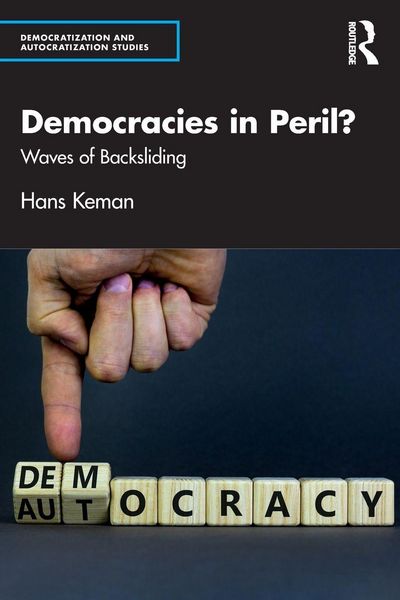
  • Produktbild: Democracies in Peril?
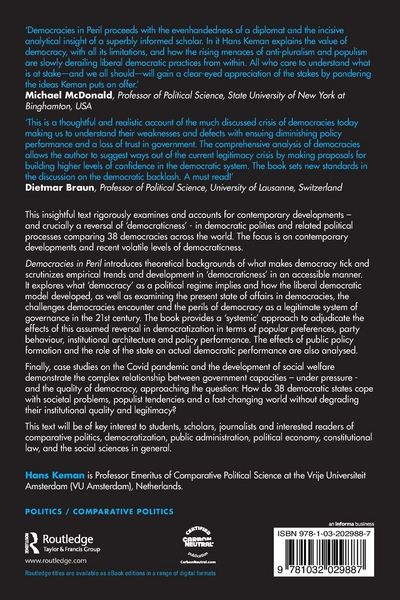
  • Produktbild: Democracies in Peril?

Democracies in Peril? Waves of Backsliding

Fr. 73.90

inkl. gesetzl. MwSt., Versandkostenfrei


Beschreibung

Produktdetails

Einband

Taschenbuch

Erscheinungsdatum

19.12.2023

Abbildungen

schwarz-weiss Illustrationen, farbige Illustrationen, Raster, farbig, Zeichnungen, schwarz-weiss, Tabellen, schwarz-weiss

Verlag

Taylor & Francis

Seitenzahl

278

Maße (L/B/H)

23.4/15.6/1.6 cm

Gewicht

427 g

Sprache

Englisch

ISBN

978-1-03-202988-7

Beschreibung

Produktdetails

Einband

Taschenbuch

Erscheinungsdatum

19.12.2023

Abbildungen

schwarz-weiss Illustrationen, farbige Illustrationen, Raster, farbig, Zeichnungen, schwarz-weiss, Tabellen, schwarz-weiss

Verlag

Taylor & Francis

Seitenzahl

278

Maße (L/B/H)

23.4/15.6/1.6 cm

Gewicht

427 g

Sprache

Englisch

ISBN

978-1-03-202988-7

Herstelleradresse

Libri GmbH
Europaallee 1
36244 Bad Hersfeld
DE

Email: gpsr@libri.de

Kundinnen und Kunden meinen

0 Bewertungen

Informationen zu Bewertungen

Zur Abgabe einer Bewertung ist eine Anmeldung im Konto notwendig. Die Authentizität der Bewertungen wird von uns nicht überprüft. Wir behalten uns vor, Bewertungstexte, die unseren Richtlinien widersprechen, entsprechend zu kürzen oder zu löschen.

Die Bewertungen sind nach Format, Anzahl Sterne und Datum sortiert.

Verfassen Sie die erste Bewertung zu diesem Artikel

Helfen Sie anderen Kund*innen durch Ihre Meinung

Kundinnen und Kunden meinen

0 Bewertungen filtern

Die Leseprobe wird geladen.
  • Produktbild: Democracies in Peril?
  • Produktbild: Democracies in Peril?
  • List of tables

    List of figures

    List of boxes

    Preface

    1 Prologue: democracy in the 21st century

    1.1 Democracies in peril: backsliding and de-democratisation

    1.2 The concept of democraticness: proto-types

    1.3 Levels of democraticness: the yard-stick for comparison

    1.4 The storyline as a "road trip": democratisation and political decay

    1.5 Value-free and value-related knowledge: a realist position

    PART 1

    Studying democracy: detecting flaws, defects and perils

    2 Reversing trends in "democraticness"

    2.1 Democracy in peril?

    2.2 Are "full" democracies indeed reverting?

    2.3 Full democracies in contrast to flawed and defective democracies

    2.4 Perilous developments: potential reasons and questions to ask

    3 Comparative political science and the study of democracy

    3.1 The academic debate: room for improvement

    3.2 Omissions in the study of democratic politics

    3.3 Comparing democratic states: full, flawed and defective polities

    4 Thinking about democracy: the origins of the liberal model

    4.1 From ideas to design

    4.2 The enlightenment and the concept of the democratic state

    4.3 John Stuart Mill and liberal democracy

    4.4 The roots of liberal democracy laid out: still work in progress

    PART 2

    Pathways towards liberal Democratisation

    5 Designing liberal democracy: institutionalising the polity

    5.1 Constitutional trajectories toward "representative" governance

    5.2 Missing dimensions, institutional progress and constraints

    5.3 The shaping of the polity towards liberal democracy

    5.4 Considerations on the road to liberal democratisation

    6 Towards universal suffrage and representation of the people

    6.1 Electoral inclusiveness and fair representation

    6.2 Finding the optimal solution to fair and effective representation

    6.3 The effects of electoral systems: inclusiveness and pluriform representation

    6.4 Institutional engineering: the choice of an optimal electoral system

    7 Who governs at the end of the day in a democracy?

    7.1 Power distribution and indirect democracy: inevitable or containable?

    7.2 Democracy and selected leadership: the role of political elites

    7.3 Indirect democracy: selecting accountable leadership

    7.4 Elitism versus pluralism: power concentration or dispersion?

    7.5 The scope and limits of liberal democracy

    PART 3

    Contemporary approaches to the development of democracy 97

    8 Polyarchy and pluralism: waves of democratisation

    8.1 Polyarchy: the route to "full" democracy?

    8.2 Pathways of democratisation: sequences towards polyarchy

    8.3 Waves of democratisation: path dependencies and critical junctures

    8.4 The second wave of democratisation and reversal (1920-1939)

    8.5 Post-war waves towards polyarchy and beyond

    8.6 Conceptual considerations on polyarchy

    9 Consensus democracy: the alternative to polyarchy?

    9.1 Cleavage theory and the coming about of consensus democracy

    9.2 Institutional engineering a peaceful polity: consensus democracy

    9.3 Consensus democracy and a better and kinder society

    9.4 Considerations on the theory of consensus democracy

    10 Parties and democracy: does politics matter?

    10.1 Politics - polity - policy and democracy

    10.2 Complexities of democracy: political parties and policy performance

    10.3 Electoral politics and parties in competition and government

    10.4 To what extent does democratic politics matter?

    PART 4

    The liberal model as a yardstick of full democracy?

    11 Ranking the stars of democraticness

    11.1 The end of history or political decay?

    11.2 Liberal democracy: the paradigm to follow? Ranking the stars

    11.3 The state of democracy in the 21st century

    11.4 Towards fuller democracies or the end of the liberal model?

    12 The limits of the liberal democratic model

    12.1 From liberal to full democracy? Variations of democraticness

    12.2 The paradigm of liberal democracy contested: toward a fuller democracy?

    12.3 Challenging liberal democracy: reforming the system

    12.4 The state of the liberal model: embeddedness or moving away?

    12.5 The limits to liberal democracy

    13 Signs of backsliding: illiberalism and populism

    13.1 "Illiberalism" and "anti-pluralism" and the level of democraticness

    13.2 Anti-pluralism and the impact of populism

    13.3 The growth of anti-democratic tendencies: illiberalism and populism

    13.4 Backsliding towards defective democracy

    PART 5

    Liberal democracy, the national state and governing society

    14 Macro-politics and micro-performance of the "state"

    14.1 The problem-solving capability of the democratic state

    14.2 Public policy formation: political choice and policy performance

    14.3 Trust is hard to gain but easy to lose: output legitimacy

    15 Liberal democracy, legitimacy and stateness: micro performance

    15.1 Democratic politics, public policy and societal performance

    15.2 The crisis-solving capacity of democratic state: coping with a pandemic

    15.3 Avoiding misery, inequalities and the pursuit of happiness?

    15.4 The democratic advantage and effective stateness as a sine qua non

    16 Legitimacy and the liberal democratic state in the 21st century

    16.1 Democracy and the state: entering a new age

    16.2 Trust and confidence in institutions

    16.3 The rise of social media and its role in politics and society

    16.4 The battle for the people: mainstream party politics in disregard

    16.5 The shift to provocative parliamentarism: harbouring populist illiberalism

    17 Epilogue: backsliding into the 21st century: outmoded or viable and resilient?

    17.1 Liberal democracy: state of affairs

    17.2 Fear for autocratisation: institutional decay and anti-democratic ethos

    17.3 Positive conditions and negative consequences of democraticness

    Index