Band 6
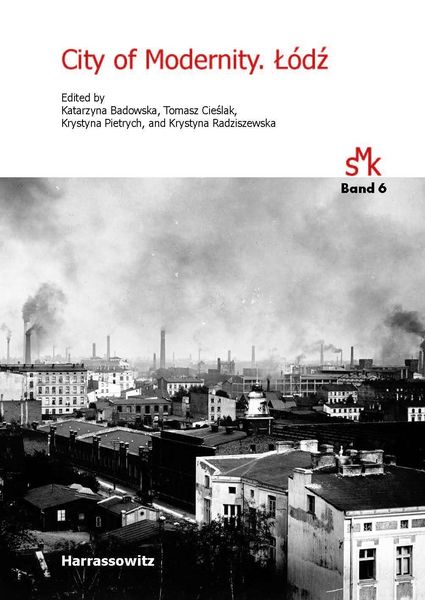
City of Modernity. Lódz Edited by Katarzyna Badowska, Tomasz Cieslak, Krystyna Pietrych, and Krystyna Radziszewska
Aus der Reihe
Studien zur Multikulturalität
Fr. 112.90
inkl. gesetzl. MwSt.Beschreibung
Produktdetails
Format
Kopierschutz
Nein
Family Sharing
Ja
Text-to-Speech
Nein
Erscheinungsdatum
28.07.2023
Herausgeber
Katarzyna Badowska + weitereVerlag
Otto Harrassowitz eBooksSeitenzahl
556 (Printausgabe)
Dateigröße
6030 KB
Sprache
Englisch
EAN
9783447393997
City of Modernity consists of 33 essays about ¿ód¿, a city that started out as an agricultural settlement and became a metropolis within a single generation, all thanks to technological progress. Its population of 767 in 1820, it had grown to 767,000 by 1939. At the turn of the century, it emblematized modernization and industrialization, and was a symbol of industrial-era modernity. It was often compared to Manchester and its truly American pace of development was admired. The city's rapid economic career was impressive, but it also exacted a high social cost.
The authors, representing a variety of fields (history, sociology, literary, theatre and film studies, cultural anthropology) analyze many aspects of ¿ód¿'s economic, social and cultural life before the outbreak of World War II. In reference to ¿ód¿ modernism, they explore notions like modernity, metropolitanism and peripherality, multi-culturalism and multi-ethnicity (¿ód¿ was a labor destination for German settlers, Polish peasants, Jews, as well as newcomers from the Russian interior), the phenomenon of workers' movements which peaked during the revolution of 1905, and the expansion of mass entertainment. The publication also looks at issues linked to urban infrastructure, animators of cultural life, and the emergence of new religious, political, and emancipation movements.
The authors, representing a variety of fields (history, sociology, literary, theatre and film studies, cultural anthropology) analyze many aspects of ¿ód¿'s economic, social and cultural life before the outbreak of World War II. In reference to ¿ód¿ modernism, they explore notions like modernity, metropolitanism and peripherality, multi-culturalism and multi-ethnicity (¿ód¿ was a labor destination for German settlers, Polish peasants, Jews, as well as newcomers from the Russian interior), the phenomenon of workers' movements which peaked during the revolution of 1905, and the expansion of mass entertainment. The publication also looks at issues linked to urban infrastructure, animators of cultural life, and the emergence of new religious, political, and emancipation movements.
Kundinnen und Kunden meinen
Verfassen Sie die erste Bewertung zu diesem Artikel
Helfen Sie anderen Kund*innen durch Ihre Meinung