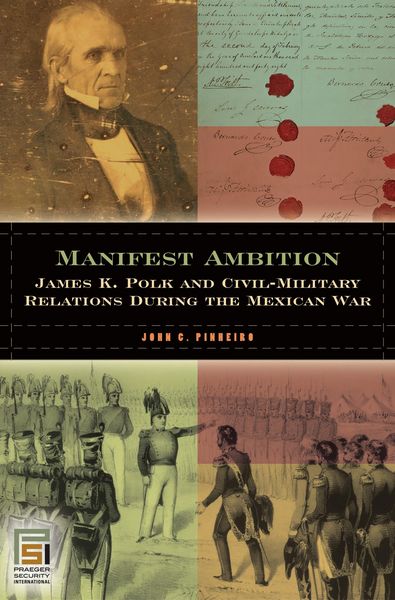
Manifest Ambition James K. Polk and Civil-Military Relations during the Mexican War
Fr. 60.90
inkl. gesetzl. MwSt.Beschreibung
Produktdetails
Format
Kopierschutz
Ja
Family Sharing
Nein
Text-to-Speech
Nein
Altersempfehlung
ab 7 Jahr(e)
Erscheinungsdatum
30.03.2007
Verlag
Bloomsbury eBooks USSeitenzahl
240 (Printausgabe)
Auflage
1. Auflage
Sprache
Englisch
EAN
9780313027284
This is not another chronological retelling of the Mexican War. Instead, it examines civil-military clashes during the war in light of Jacksonian politics and the American citizen-soldier tradition, looking at events that shed light on civilian authority over the military, as well as the far reaching impact of political ambition during this period (specifically, presidential power and the quest for the presidency). By 1848, Americans had come to realize that in their burgeoning democracy, generals and politicians could scarcely resist the temptation to use war for partisan gain. It was a lesson well learned and one that still resonates today.
The Mexican War is known for the invaluable experience it provided to future Civil War officers and as an example of America's drive to fulfill her Manifest Destiny. Yet it was more than a training ground, more than a display of imperialism. Significantly, the Mexican War tested civilian control of the military and challenged traditional assumptions about the role of the army in American society. In so doing, it revealed the degree to which, by 1846, the harsh partisanships of the Jacksonian Era had impacted the American approach to war. This is not another chronological retelling of the Mexican War. Instead, it examines civil-military clashes during the war in light of Jacksonian politics and the American citizen-soldier tradition, looking both at events that shed light on civilian authority over the military and at the far reaching impact of political ambition during this period (specifically, presidential power and the quest for the presidency).
In addition to politics, a host of others factors marred civil-military relations during the war, threatening U.S. victory. These included atrocities committed by Americans against Mexicans, disobedient officers, and inefficient U.S. military governors. In the end, as Manifest Ambition shows, Polk's ability to overcome his partisan leanings, his micro-management of the war effort, and his overall strategic vision, helped avoid both a prolonged occupation and the annexation of All Mexico. By 1848, Americans had come to realize that in their burgeoning democracy, generals and politicians could scarcely resist the temptation to use war for partisan gain. It was a lesson well learned and one that still resonates today.
The Mexican War is known for the invaluable experience it provided to future Civil War officers and as an example of America's drive to fulfill her Manifest Destiny. Yet it was more than a training ground, more than a display of imperialism. Significantly, the Mexican War tested civilian control of the military and challenged traditional assumptions about the role of the army in American society. In so doing, it revealed the degree to which, by 1846, the harsh partisanships of the Jacksonian Era had impacted the American approach to war. This is not another chronological retelling of the Mexican War. Instead, it examines civil-military clashes during the war in light of Jacksonian politics and the American citizen-soldier tradition, looking both at events that shed light on civilian authority over the military and at the far reaching impact of political ambition during this period (specifically, presidential power and the quest for the presidency).
In addition to politics, a host of others factors marred civil-military relations during the war, threatening U.S. victory. These included atrocities committed by Americans against Mexicans, disobedient officers, and inefficient U.S. military governors. In the end, as Manifest Ambition shows, Polk's ability to overcome his partisan leanings, his micro-management of the war effort, and his overall strategic vision, helped avoid both a prolonged occupation and the annexation of All Mexico. By 1848, Americans had come to realize that in their burgeoning democracy, generals and politicians could scarcely resist the temptation to use war for partisan gain. It was a lesson well learned and one that still resonates today.
Kundinnen und Kunden meinen
Verfassen Sie die erste Bewertung zu diesem Artikel
Helfen Sie anderen Kund*innen durch Ihre Meinung