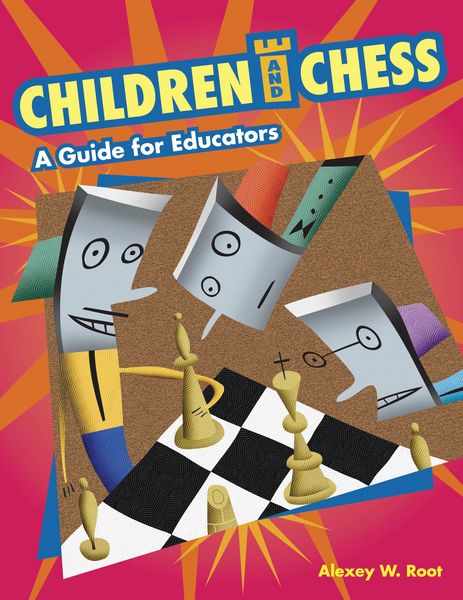
Children and Chess A Guide for Educators
-
- Taschenbuch
- eBook ausgewählt
-
Form:Einzelkauf Download
-
Sprache:Englisch
Fr. 27.90
inkl. gesetzl. MwSt.Beschreibung
Produktdetails
Format
Kopierschutz
Ja
Family Sharing
Nein
Text-to-Speech
Nein
Altersempfehlung
ab 7 Jahr(e)
Erscheinungsdatum
30.03.2006
Verlag
Bloomsbury eBooks USSeitenzahl
136 (Printausgabe)
Auflage
1. Auflage
Sprache
Englisch
EAN
9780897899932
This book helps educators and librarians prepare students to succeed in University Interscholastic League (UIL) Chess Puzzle.
Children and Chess: A Guide for Educators is the first book to show the connection between accepted educational theories and chess. It features lesson plans teachers can use immediately, and from which they can learn the basics of the game. Since the plans meet academic goals through chess, teachers also learn that chess can be a part of reading, math, science, and social studies. An appendix showing how chess meets the requirements of curriculum standards is another plus.
The relationship of chess to academic and humanistic educational goals is convincingly illustrated as curriculum and psychological theories from John D. McNeil, Mihaly Csikszentmihalyi, and Howard Gardner are outlined and applied to the question why chess? Children and Chess features lesson plans teachers can use immediately, and from which they can learn the basics of the game. Since the plans meet academic goals through chess, teachers also learn that chess can be a part of reading, math, science, and social studies. An appendix showing how chess meets the requirements of curriculum standards is another plus. Grades 4-8.
Children and Chess: A Guide for Educators is the first book to show the connection between accepted educational theories and chess. It features lesson plans teachers can use immediately, and from which they can learn the basics of the game. Since the plans meet academic goals through chess, teachers also learn that chess can be a part of reading, math, science, and social studies. An appendix showing how chess meets the requirements of curriculum standards is another plus.
The relationship of chess to academic and humanistic educational goals is convincingly illustrated as curriculum and psychological theories from John D. McNeil, Mihaly Csikszentmihalyi, and Howard Gardner are outlined and applied to the question why chess? Children and Chess features lesson plans teachers can use immediately, and from which they can learn the basics of the game. Since the plans meet academic goals through chess, teachers also learn that chess can be a part of reading, math, science, and social studies. An appendix showing how chess meets the requirements of curriculum standards is another plus. Grades 4-8.
Kundinnen und Kunden meinen
Verfassen Sie die erste Bewertung zu diesem Artikel
Helfen Sie anderen Kund*innen durch Ihre Meinung