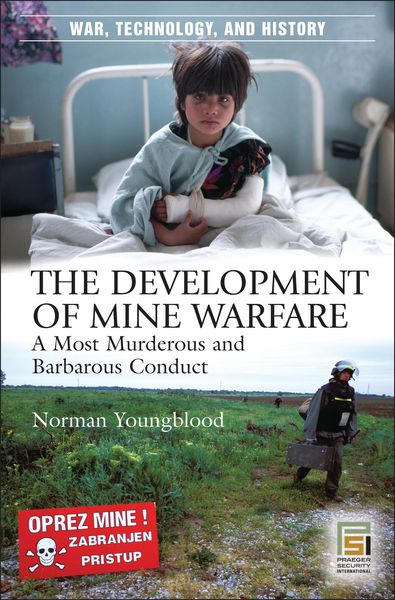
The Development of Mine Warfare A Most Murderous and Barbarous Conduct
Fr. 60.90
inkl. gesetzl. MwSt.Beschreibung
Produktdetails
Format
Kopierschutz
Ja
Family Sharing
Nein
Text-to-Speech
Nein
Altersempfehlung
ab 7 Jahr(e)
Erscheinungsdatum
30.06.2006
Verlag
Bloomsbury eBooks USSeitenzahl
280 (Printausgabe)
Auflage
1. Auflage
Sprache
Englisch
EAN
9780313027499
In 1997, the International Campaign to Ban Landmines (ICBL) coordinated the Convention on the Prohibition of the Use, Stockpiling, Production, and Transfer of Anti-Personnel Mines and on their Destruction. As of mid-2005, 145 states had signed the agreement. The ICBL's efforts were in large part a response to the careless use of landmines in the previous fifty years. The history of mine use in warfare, however, goes back much further than the World Wars of the 20th century and includes both land and sea use. This first comprehensive study traces the technical, tactical, and ethical developments of mine warfare, from ancient times to the present.
Beginning with mine warfare's roots in ancient Assyria and China, Youngblood takes the reader through the centuries of debate about how these hidden weapons should be used. A look at 19th-century developments explores the intertwined development of land and sea mines and the inventors behind them, including Robert Fulton, Samuel Colt, and Immanuel Nobel, father of Alfred Nobel. Subsequent chapters examine the use of mines in the American Civil War, the Russo-Japanese War, both World Wars, and the battlefields of the Cold War, and chart key battles and technical innovations, such as the development of air-delivered munitions. Finally, the author addresses the ethical concerns raised by the careless mining, namely the impact on civilians and the difficulties of de-mining, and the treaties that regulate landmine use.
Beginning with mine warfare's roots in ancient Assyria and China, Youngblood takes the reader through the centuries of debate about how these hidden weapons should be used. A look at 19th-century developments explores the intertwined development of land and sea mines and the inventors behind them, including Robert Fulton, Samuel Colt, and Immanuel Nobel, father of Alfred Nobel. Subsequent chapters examine the use of mines in the American Civil War, the Russo-Japanese War, both World Wars, and the battlefields of the Cold War, and chart key battles and technical innovations, such as the development of air-delivered munitions. Finally, the author addresses the ethical concerns raised by the careless mining, namely the impact on civilians and the difficulties of de-mining, and the treaties that regulate landmine use.
Kundinnen und Kunden meinen
Verfassen Sie die erste Bewertung zu diesem Artikel
Helfen Sie anderen Kund*innen durch Ihre Meinung