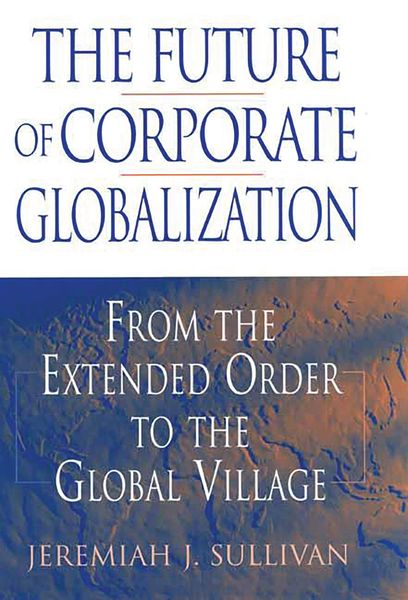
The Future of Corporate Globalization From the Extended Order to the Global Village
Fr. 90.90
inkl. gesetzl. MwSt.Beschreibung
Produktdetails
Format
Kopierschutz
Ja
Family Sharing
Nein
Text-to-Speech
Nein
Altersempfehlung
ab 7 Jahr(e)
Erscheinungsdatum
30.03.2002
Verlag
Bloomsbury eBooks USSeitenzahl
272 (Printausgabe)
Auflage
1. Auflage
Sprache
Englisch
EAN
9780313006821
Paradigms are shifting. The capitalist market model, or extended order, whose globalization forces support the business methods of multinational corporations, is giving way to the Global Village model-one of justice, virtue, stability, and national sovereignty. Sullivan contends that by creating conditions for opposition, globalization may be dooming itself. Here he explains the shifting paradigm and considers its likely impact on corporate conduct.
Companies ignoring the growing chorus of discontent with globalization do so at their peril. But those who adapt to new realities will not merely survive-they will prosper. This book details the adaptations that corporations need to implement to safeguard their roles in the future:
. Corporate governance bodies will increasingly include NGO representatives and employees.
. Justice, stability, virtue, and national cultural identity will become corporate goals, alongside the profit motive.
. Customer relationships will become enriched by mutual obligations and trust.
. Risky global corporate strategies will have less appeal than more stable avenues of action.
. Employee relations will increasingly take into account workers' growing desire for meaningful labor whose rewards entail more than financial remuneration.
. Managers will become more like public servants and less like independent agents.
The persistence of these trends-accelerated by the growing power of the Internet to bring far-flung activists together in pursuit of common goals-threatens the existing order as never before.
Companies ignoring the growing chorus of discontent with globalization do so at their peril. But those who adapt to new realities will not merely survive-they will prosper. This book details the adaptations that corporations need to implement to safeguard their roles in the future:
. Corporate governance bodies will increasingly include NGO representatives and employees.
. Justice, stability, virtue, and national cultural identity will become corporate goals, alongside the profit motive.
. Customer relationships will become enriched by mutual obligations and trust.
. Risky global corporate strategies will have less appeal than more stable avenues of action.
. Employee relations will increasingly take into account workers' growing desire for meaningful labor whose rewards entail more than financial remuneration.
. Managers will become more like public servants and less like independent agents.
The persistence of these trends-accelerated by the growing power of the Internet to bring far-flung activists together in pursuit of common goals-threatens the existing order as never before.
Kundinnen und Kunden meinen
Verfassen Sie die erste Bewertung zu diesem Artikel
Helfen Sie anderen Kund*innen durch Ihre Meinung