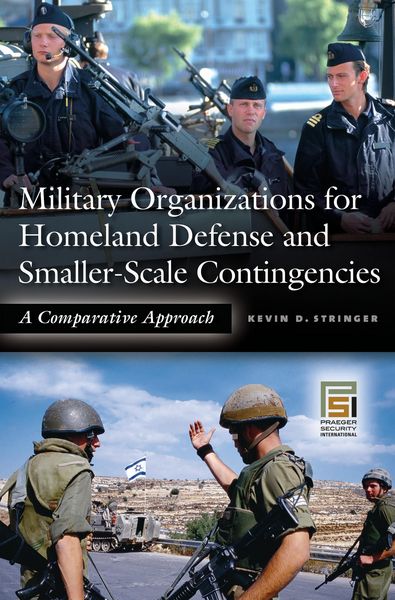
Military Organizations for Homeland Defense and Smaller-Scale Contingencies A Comparative Approach
Fr. 60.90
inkl. gesetzl. MwSt.Beschreibung
Produktdetails
Format
Kopierschutz
Ja
Family Sharing
Nein
Text-to-Speech
Nein
Altersempfehlung
ab 7 Jahr(e)
Erscheinungsdatum
30.10.2006
Verlag
Bloomsbury eBooks USSeitenzahl
240 (Printausgabe)
Auflage
1. Auflage
Sprache
Englisch
EAN
9780313087233
History has often confirmed that it is not superior weapons but superior organizations that are the most effective factor in achieving military success. In light of this consideration, Kevin D. Stringer's new work proposes how the U.S. military can best be restructured to conduct military operations other than war (as they are known in doctrinal terms).. Such reform is central to meeting the demands of homeland defense and smaller-scale contingencies, including nation-building and stability operations. Foreign military formations present models for peace operations, irregular warfare, and other missions, as well as counterterrorism, law enforcement, and border control. The models considered - drawn from tactical units in Britain, Denmark, Germany, Israel, Norway, Rhodesia, Russia, and Switzerland - are selected as best practice examples for transforming the U.S. Armed Forces for future missions both at home and abroad.
The author describes the categories of military operations other than war in the context of force structure requirements for homeland defense and irregular warfare. Each chapter aligns foreign tactical organizations with these military operations to identify appropriate formations to enhance the U.S. Army. This issue of future organizational structure is crucial to the debate over the Quadrennial Defense Review, the Pentagon report to Congress on emerging threats, and the future role of the National Guard. Changes in existing force structure will have significant implications for the conduct of stabilization operations in Iraq and Afghanistan as well as responses by the active and Reserve components to domestic emergencies.
The author describes the categories of military operations other than war in the context of force structure requirements for homeland defense and irregular warfare. Each chapter aligns foreign tactical organizations with these military operations to identify appropriate formations to enhance the U.S. Army. This issue of future organizational structure is crucial to the debate over the Quadrennial Defense Review, the Pentagon report to Congress on emerging threats, and the future role of the National Guard. Changes in existing force structure will have significant implications for the conduct of stabilization operations in Iraq and Afghanistan as well as responses by the active and Reserve components to domestic emergencies.
Kundinnen und Kunden meinen
Verfassen Sie die erste Bewertung zu diesem Artikel
Helfen Sie anderen Kund*innen durch Ihre Meinung