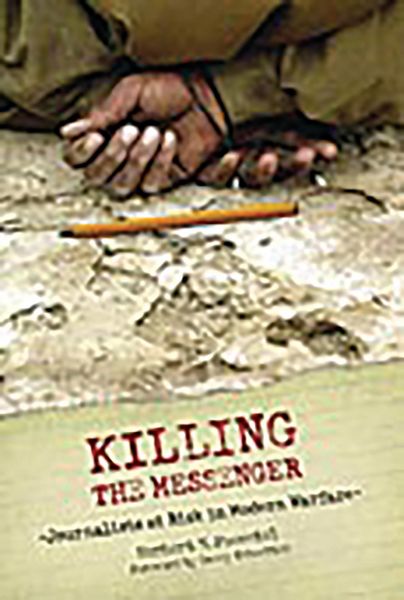
Killing the Messenger Journalists at Risk in Modern Warfare
Fr. 71.90
inkl. gesetzl. MwSt.Beschreibung
Produktdetails
Format
Kopierschutz
Ja
Family Sharing
Nein
Text-to-Speech
Nein
Altersempfehlung
ab 7 Jahr(e)
Erscheinungsdatum
30.03.2006
Verlag
Bloomsbury eBooks USSeitenzahl
176 (Printausgabe)
Auflage
1. Auflage
Sprache
Englisch
EAN
9780313054648
Killing the Messenger reveals the dangerous new face of war and journalism. Covering armed conflicts has always been dangerous business, but in the past, press heroes like Ernie Pyle and Edward R. Murrow faced only the danger of random bullets or bombs. Today's war correspondent is actually in the cross hairs, a target of combatants on all sides of conflicts. In their own words, correspondents describe the new dangers they face and attempt to explain why they are targeted.
Killing the Messenger reveals the dangerous new face of war and journalism. Covering armed conflicts has always been dangerous business, but in the past, press heroes like Ernie Pyle and Edward R. Murrow faced only the danger of random bullets or bombs. Today's war correspondent is actually in the cross hairs, a target of combatants on all sides of conflicts.
In this book, correspondents describe the new dangers they face, and attempt to explain why they are targeted. Is it simply that modern combatants are more brutal than in the past, or has journalism changed, making correspondents players, rather than observers, in modern warfare? Extended interviews with correspondents who have been abducted and tortured during Middle East conflicts shed chilling light on this new face of war. These journalists, who have paid dearly to bring first-hand images of war to the public, offer some surprising insights into the nature and motivation of their kidnappers, and the reasons why reporters are targeted. They display no self-pity and little inclination to blame anyone other than themselves. At the same time, they are candid in describing the violence within Iraq and without. Ways to reduce the risks for reporters are discussed, but these editors and correspondents suggest that, short of withdrawing into isolated and protected enclaves, they may be facing an indefinite escalation of violence against journalists.
Killing the Messenger reveals the dangerous new face of war and journalism. Covering armed conflicts has always been dangerous business, but in the past, press heroes like Ernie Pyle and Edward R. Murrow faced only the danger of random bullets or bombs. Today's war correspondent is actually in the cross hairs, a target of combatants on all sides of conflicts.
In this book, correspondents describe the new dangers they face, and attempt to explain why they are targeted. Is it simply that modern combatants are more brutal than in the past, or has journalism changed, making correspondents players, rather than observers, in modern warfare? Extended interviews with correspondents who have been abducted and tortured during Middle East conflicts shed chilling light on this new face of war. These journalists, who have paid dearly to bring first-hand images of war to the public, offer some surprising insights into the nature and motivation of their kidnappers, and the reasons why reporters are targeted. They display no self-pity and little inclination to blame anyone other than themselves. At the same time, they are candid in describing the violence within Iraq and without. Ways to reduce the risks for reporters are discussed, but these editors and correspondents suggest that, short of withdrawing into isolated and protected enclaves, they may be facing an indefinite escalation of violence against journalists.
Kundinnen und Kunden meinen
Verfassen Sie die erste Bewertung zu diesem Artikel
Helfen Sie anderen Kund*innen durch Ihre Meinung