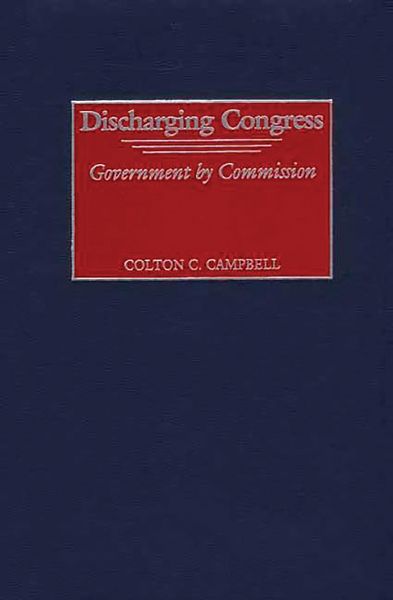
Discharging Congress Government by Commission
Fr. 89.90
inkl. gesetzl. MwSt.Beschreibung
Produktdetails
Format
Kopierschutz
Ja
Family Sharing
Nein
Text-to-Speech
Nein
Altersempfehlung
ab 7 Jahr(e)
Erscheinungsdatum
30.11.2001
Verlag
Bloomsbury eBooks USSeitenzahl
216 (Printausgabe)
Auflage
1. Auflage
Sprache
Englisch
EAN
9780313073748
The creation of temporary, independent advisory bodies that give advice to Congress, is an important yet under-investigated area of congressional delegation. With variations to fit the circumstances, lawmakers entrust commissions to accomplish diverse goals, such as coping with increases in the scope and complexity of legislation, forging consensus, drafting legislation, finessing institutional obstacles, coordinating strategy, and promoting party unity.
Campbell investigates why and when Congress formulates policy by commissions rather than by the normal legislative process. He shows that many variables go into the decision to entrust those bodies to render non-partisan recommendations. According to lawmakers and their staff, the three primary justifications for choosing to delegate to commission include expertise, workload, and avoidance. Which of these three dominates depends in large part on the politics surrounding a particular issue and the nature of the policy problem. The logic of delegation to each of the three commission types is different. Which reason dominates depends in large part on the politics surrounding the issue and the nature of the legislative policy problem. Scholars, students, and other researchers involved with Congress, American government, and public policy will find the study of particular interest.
Campbell investigates why and when Congress formulates policy by commissions rather than by the normal legislative process. He shows that many variables go into the decision to entrust those bodies to render non-partisan recommendations. According to lawmakers and their staff, the three primary justifications for choosing to delegate to commission include expertise, workload, and avoidance. Which of these three dominates depends in large part on the politics surrounding a particular issue and the nature of the policy problem. The logic of delegation to each of the three commission types is different. Which reason dominates depends in large part on the politics surrounding the issue and the nature of the legislative policy problem. Scholars, students, and other researchers involved with Congress, American government, and public policy will find the study of particular interest.
Kundinnen und Kunden meinen
Verfassen Sie die erste Bewertung zu diesem Artikel
Helfen Sie anderen Kund*innen durch Ihre Meinung