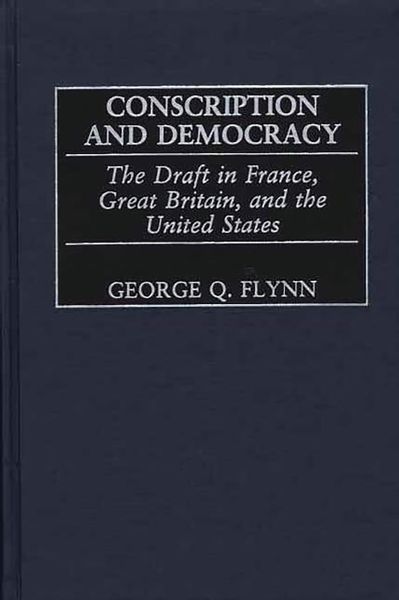
Conscription and Democracy The Draft in France, Great Britain, and the United States
Fr. 90.90
inkl. gesetzl. MwSt.Beschreibung
Produktdetails
Format
Kopierschutz
Ja
Family Sharing
Nein
Text-to-Speech
Nein
Altersempfehlung
ab 7 Jahr(e)
Erscheinungsdatum
30.12.2001
Verlag
Bloomsbury eBooks USSeitenzahl
318 (Printausgabe)
Auflage
1. Auflage
Sprache
Englisch
EAN
9780313074196
Finding the manpower to defend democracy has been a recurring problem. Russell Weigley writes: The historic preoccupation of the Army's thought in peacetime has been the manpower question: how, in an unmilitary nation, to muster adequate numbers of capable soldiers quickly should war occur. When the nature of modern warfare made an all-volunteer army inadequate, the major Western democracies confronted the dilemma of involuntary military service in a free society. The core of this manuscript concerns methods by which France, Great Britain, and the United States solved the problem and why some solutions were more lasting and effective than others. Flynn challenges conventional wisdom that suggests that conscription was inefficient and that it promoted inequality of sacrifice.
Sharing similar but not identical diplomatic outlooks, the three countries discussed here were allies in world wars and in the Cold War, and they also confronted the problem of using conscripts to defend colonial interests in an age of decolonization. These societies rest upon democratic principles, and operating a draft in a democracy raises several unique problems. A particular tension develops as a result of adopting forced military service in a polity based on concepts of individual rights and freedoms. Despite the protest and inconsistencies, the criticism and waste, Flynn reveals that conscription served the three Western democracies well in an historical context, proving effective in gathering fighting men and allowing a flexibility to cope and change as problems arose.
Sharing similar but not identical diplomatic outlooks, the three countries discussed here were allies in world wars and in the Cold War, and they also confronted the problem of using conscripts to defend colonial interests in an age of decolonization. These societies rest upon democratic principles, and operating a draft in a democracy raises several unique problems. A particular tension develops as a result of adopting forced military service in a polity based on concepts of individual rights and freedoms. Despite the protest and inconsistencies, the criticism and waste, Flynn reveals that conscription served the three Western democracies well in an historical context, proving effective in gathering fighting men and allowing a flexibility to cope and change as problems arose.
Kundinnen und Kunden meinen
Verfassen Sie die erste Bewertung zu diesem Artikel
Helfen Sie anderen Kund*innen durch Ihre Meinung