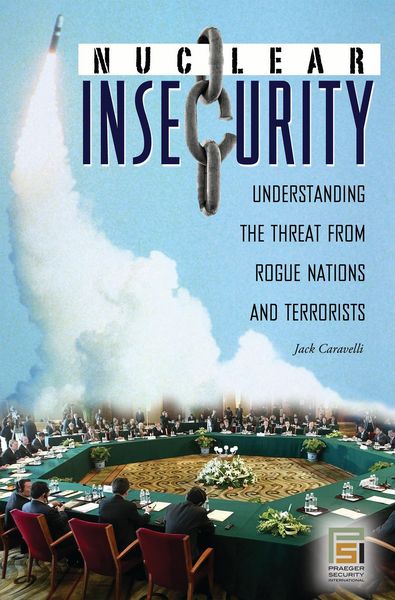
Nuclear Insecurity Understanding the Threat from Rogue Nations and Terrorists
Fr. 64.90
inkl. gesetzl. MwSt.Beschreibung
Produktdetails
Format
Kopierschutz
Ja
Family Sharing
Nein
Text-to-Speech
Nein
Altersempfehlung
ab 7 Jahr(e)
Erscheinungsdatum
30.11.2007
Verlag
Bloomsbury eBooks USSeitenzahl
192 (Printausgabe)
Auflage
1. Auflage
Sprache
Englisch
EAN
9780275997472
Nuclear Insecurity is an insider's account of official American efforts to prevent the theft or diversion of nuclear and radiological weapons that could be used by rogue nations or terrorist groups. This perspective draws heavily from the author's work on the White House National Security Council Staff (1996-2000), where he was directly responsible to President Clinton for the development of U.S. nuclear material security policies and, subsequently, at the U.S. Department of Energy, where he directed the department's largest international nuclear security program, focused primarily on Russia.
In Caravelli's assessment, despite exceptional bipartisan political support and very high funding levels that have reached over $9 billion, a series of policy mistakes and programmatic bureaucratic missteps have badly compromised the United States government's efforts to protect against the spread of nuclear weapons and materials. The most striking example of the current situation is that the U.S. government, some 12 years after the start of these programs, still has failed to enhance the security of more than 300 metric tons of nuclear materials in Russia alone, enough to make hundreds of nuclear devices. The book concludes with recommendations and policy prescriptions for addressing some of these problems.
In Caravelli's assessment, despite exceptional bipartisan political support and very high funding levels that have reached over $9 billion, a series of policy mistakes and programmatic bureaucratic missteps have badly compromised the United States government's efforts to protect against the spread of nuclear weapons and materials. The most striking example of the current situation is that the U.S. government, some 12 years after the start of these programs, still has failed to enhance the security of more than 300 metric tons of nuclear materials in Russia alone, enough to make hundreds of nuclear devices. The book concludes with recommendations and policy prescriptions for addressing some of these problems.
Noch keine Bewertungen vorhanden
Verfassen Sie die erste Bewertung zu diesem Artikel
Helfen Sie anderen Kundinnen und Kunden durch Ihre Meinung.