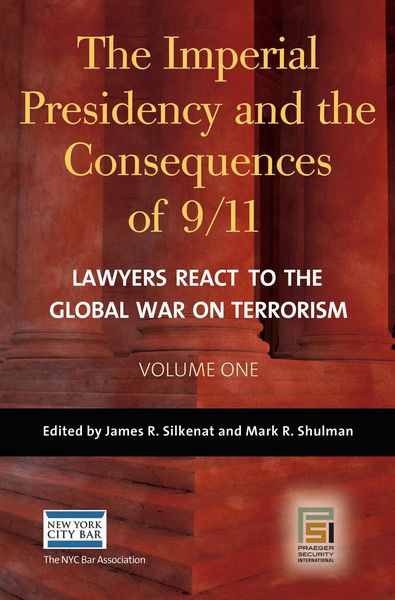
The Imperial Presidency and the Consequences of 9/11 Lawyers React to the Global War on Terrorism [2 volumes]
Aus der Reihe
Praeger Security International
Fr. 213.90
inkl. gesetzl. MwSt.Beschreibung
Produktdetails
Format
Kopierschutz
Ja
Family Sharing
Nein
Text-to-Speech
Nein
Altersempfehlung
ab 7 Jahr(e)
Erscheinungsdatum
19.02.2007
Herausgeber
Mark R. Shulman + weitereVerlag
Bloomsbury eBooks USSeitenzahl
520 (Printausgabe)
Auflage
1. Auflage
Sprache
Englisch
EAN
9781567207088
The issue of the imperial presidency, which is raised in connection with the Bush administration's response to the legal issues flowing from the 9/11 attacks, is one that now resonates broadly across the American political landscape: not just with Democrats, but with Republicans too; and not just with lawyers, but with the American public generally. Are the legal powers of the President unlimited in cases of terrorist attacks on the United States? Do the courts and legislatures have a role to play? How relevant is the U.S. Constitution in these instances? These reports, compiled by the NYC Bar Association merit wider distribution. Thus, Silkenat and Shulman have brought them together to give readers a clearer sense of what the rule of law really means to Americans. As noted in a New York Times editorial in January 2006: Nothing in the national consensus to combat terrorism after 9/11 envisioned the unilateral rewriting of more than 200 years of tradition and law by the president embarked on an ideological crusade
Over the past few years, much lip service has been paid to the phrase rule of law. At the same time, the U.S. government has avoided basic rule of law principles by holding prisoners outside the law (off the books and out of Red Cross supervision, off shore or even on U.S. soil, but without due process or urgent matter that bears on the security of this country). In both volumes, learned practitioners and scholars argue in favor of adherence to time-tested principles. Each report has a preface that places the material in historical and legal context.
Over the past few years, much lip service has been paid to the phrase rule of law. At the same time, the U.S. government has avoided basic rule of law principles by holding prisoners outside the law (off the books and out of Red Cross supervision, off shore or even on U.S. soil, but without due process or urgent matter that bears on the security of this country). In both volumes, learned practitioners and scholars argue in favor of adherence to time-tested principles. Each report has a preface that places the material in historical and legal context.
Kundinnen und Kunden meinen
Verfassen Sie die erste Bewertung zu diesem Artikel
Helfen Sie anderen Kund*innen durch Ihre Meinung