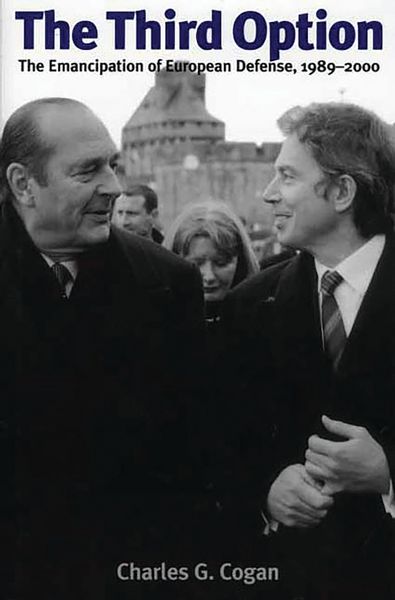
The Third Option The Emancipation of European Defense, 1989 - 2000
Fr. 89.90
inkl. gesetzl. MwSt.Beschreibung
Produktdetails
Format
Kopierschutz
Ja
Family Sharing
Nein
Text-to-Speech
Nein
Altersempfehlung
ab 7 Jahr(e)
Erscheinungsdatum
30.09.2001
Verlag
Bloomsbury eBooks USSeitenzahl
200 (Printausgabe)
Auflage
1. Auflage
Sprache
Englisch
EAN
9780313073847
It was logical to expect that the European Economic and Monetary Union would lead ineluctably to an autonomous European defense; the very size of the European Union seems to demand it. The EU eventually will reach the point where its economic and demographic weight will far exceed that of the United States. Can it not be expected too that the EU will seek to make this weight felt internationally? Cogan tracks the halting creation of an independent European military structure, a third way between national armies and ATO, since the Iron Curtain's fall.
With the Cold War's end and subsequent western engagements in Central and Eastern Europe, it is no longer a question of whether NATO and the EU compare; they now must relate. They have to coordinate their planning and force postures so as to avoid duplication of resources and efforts. Although NATO's integrated command structure theoretically was an anomaly with the end of the Cold War, it nevertheless turned out to be the case in Bosnia, and later Kosovo, that nothing was possible until the Americans intervened. The virtue of integrated command -- American participation and know-how -- was once again seen as crucially important, despite the increasingly anachronistic deficit of sovereignty for Western Europe in defense matters. In the long run, Europe's economic power must be balanced by its military and diplomatic might.
With the Cold War's end and subsequent western engagements in Central and Eastern Europe, it is no longer a question of whether NATO and the EU compare; they now must relate. They have to coordinate their planning and force postures so as to avoid duplication of resources and efforts. Although NATO's integrated command structure theoretically was an anomaly with the end of the Cold War, it nevertheless turned out to be the case in Bosnia, and later Kosovo, that nothing was possible until the Americans intervened. The virtue of integrated command -- American participation and know-how -- was once again seen as crucially important, despite the increasingly anachronistic deficit of sovereignty for Western Europe in defense matters. In the long run, Europe's economic power must be balanced by its military and diplomatic might.
Kundinnen und Kunden meinen
Verfassen Sie die erste Bewertung zu diesem Artikel
Helfen Sie anderen Kund*innen durch Ihre Meinung