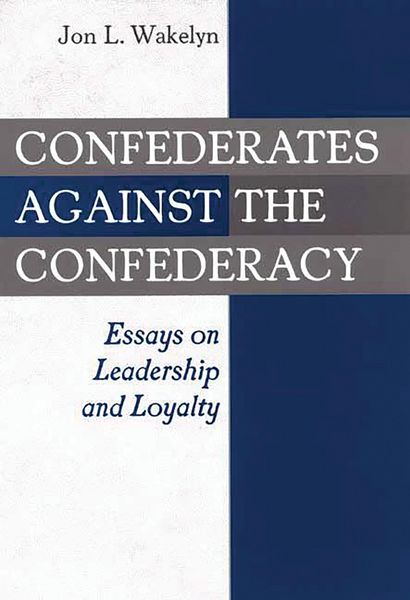
Confederates against the Confederacy Essays on Leadership and Loyalty
Fr. 89.90
inkl. gesetzl. MwSt.Beschreibung
Produktdetails
Format
Kopierschutz
Ja
Family Sharing
Nein
Text-to-Speech
Nein
Altersempfehlung
ab 7 Jahr(e)
Erscheinungsdatum
30.03.2002
Verlag
Bloomsbury eBooks USSeitenzahl
208 (Printausgabe)
Auflage
1. Auflage
Sprache
Englisch
EAN
9780313010774
Far from being a monolith with unanimous leadership loyalty to the cause of a separate nation, the Confederacy was in reality deeply divided over how to achieve independence. Many supposedly loyal leaders, civilian as well as elected officials, opposed governmental policies on the national and state levels, and their actions ultimately influenced non-support for military policies. Congressional differences over arming the slaves and bureaucratic squabbles over how to conduct the war disrupted the government and Cabinet of President Jefferson Davis. Rumors of such irreconcilable differences spread throughout the South, contributing to an overall decline in morale and support for the war effort and causing the Confederacy to come apart from within.
When asked to make sacrifices, civilian leaders found themselves caught in the dilemma of either aiding the Confederacy or losing money through poor utilization of slave labor. To sustain profits, the business and planter classes often traded with the enemy. Upon consideration of arming the slaves, many members of Congress proclaimed that the war effort was not worth the demise of slavery and preferred instead to take their chances with the Northern government. Cultural leaders, clergy, newspapermen, and men of letters claimed their loyalty to the war effort, but often criticized government policies in public. By asking for financial support and instituting a military draft, the national government infuriated local patriots who wanted to defend their own states more than they desired to defeat the enemy.
When asked to make sacrifices, civilian leaders found themselves caught in the dilemma of either aiding the Confederacy or losing money through poor utilization of slave labor. To sustain profits, the business and planter classes often traded with the enemy. Upon consideration of arming the slaves, many members of Congress proclaimed that the war effort was not worth the demise of slavery and preferred instead to take their chances with the Northern government. Cultural leaders, clergy, newspapermen, and men of letters claimed their loyalty to the war effort, but often criticized government policies in public. By asking for financial support and instituting a military draft, the national government infuriated local patriots who wanted to defend their own states more than they desired to defeat the enemy.
Kundinnen und Kunden meinen
Verfassen Sie die erste Bewertung zu diesem Artikel
Helfen Sie anderen Kund*innen durch Ihre Meinung