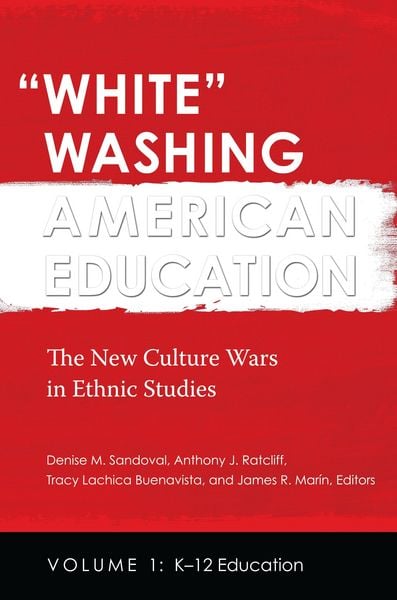
White Washing American Education The New Culture Wars in Ethnic Studies [2 volumes]
-
Form:Einzelkauf Download
-
Sprache:Englisch
-
eBook Format:PDF
- PDF Fr. 136.90 ausgewählt
- ePUB Fr. 136.90
Fr. 136.90
inkl. gesetzl. MwSt.Beschreibung
Produktdetails
Format
Kopierschutz
Ja
Family Sharing
Nein
Text-to-Speech
Nein
Altersempfehlung
ab 7 Jahr(e)
Erscheinungsdatum
03.10.2016
Herausgeber
Denise M. Sandoval + weitereVerlag
Bloomsbury eBooks USSeitenzahl
680 (Printausgabe)
Auflage
1. Auflage
Sprache
Englisch
EAN
9781440832567
Recent attacks on Ethnic Studies, revisionist actions in curriculum content, and anti-immigrant policies are creating a new culture war in America. This important work lays out the current debates-both in K-12 and higher education-to uncover the dangers and to offer solutions.
In 2010, HB 2281-a law that bans ethnic studies in Arizona-was passed; in the same year, Texas whitewashed curriculum and textbook changes at the K-12 level. Since then, the nation has seen a rise in the legal and political war on Ethnic Studies, revisionist actions in curriculum content, and anti-immigrant policies, creating a new culture war in America. "White" Washing American Education demonstrates the value and necessity of Ethnic Studies in the 21st century by sharing the voices of those in the trenches-educators, students, community activists, and cultural workers-who are effectively using multidisciplinary approaches to education.
This two-volume set of contributed essays provides readers with a historical context to the current struggles and attacks on Ethnic Studies by examining the various cultural and political "wars" that are making an impact on American educational systems, and how students, faculty, and communities are impacted as a result. It investigates specific cases of educational whitewashing and challenges to that whitewashing, such as Tom Horne's attack along with the State Board of Education against the Mexican American studies in the Tucson School District, the experiences of professors of color teaching Ethnic Studies in primarily white universities across the United States, and the role that student activists play in the movements for Ethnic Studies in their high schools, universities, and communities. Readers will come away with an understanding of the history of Ethnic Studies in the United States, the challenges and barriers that Ethnic Studies scholars and practitioners currently face, and the ways to advocate for the development of Ethnic Studies within formal and community-based spaces.
In 2010, HB 2281-a law that bans ethnic studies in Arizona-was passed; in the same year, Texas whitewashed curriculum and textbook changes at the K-12 level. Since then, the nation has seen a rise in the legal and political war on Ethnic Studies, revisionist actions in curriculum content, and anti-immigrant policies, creating a new culture war in America. "White" Washing American Education demonstrates the value and necessity of Ethnic Studies in the 21st century by sharing the voices of those in the trenches-educators, students, community activists, and cultural workers-who are effectively using multidisciplinary approaches to education.
This two-volume set of contributed essays provides readers with a historical context to the current struggles and attacks on Ethnic Studies by examining the various cultural and political "wars" that are making an impact on American educational systems, and how students, faculty, and communities are impacted as a result. It investigates specific cases of educational whitewashing and challenges to that whitewashing, such as Tom Horne's attack along with the State Board of Education against the Mexican American studies in the Tucson School District, the experiences of professors of color teaching Ethnic Studies in primarily white universities across the United States, and the role that student activists play in the movements for Ethnic Studies in their high schools, universities, and communities. Readers will come away with an understanding of the history of Ethnic Studies in the United States, the challenges and barriers that Ethnic Studies scholars and practitioners currently face, and the ways to advocate for the development of Ethnic Studies within formal and community-based spaces.
Kundinnen und Kunden meinen
Verfassen Sie die erste Bewertung zu diesem Artikel
Helfen Sie anderen Kund*innen durch Ihre Meinung