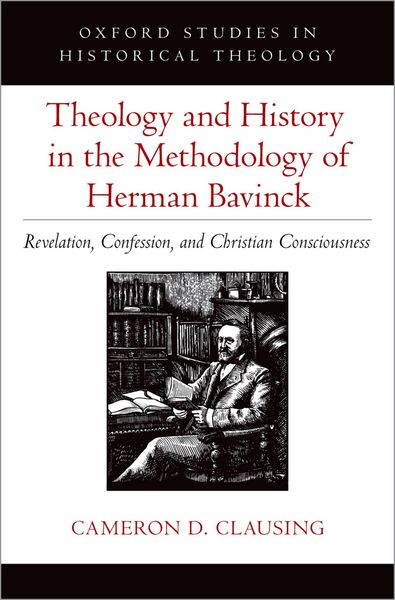
Theology and History in the Methodology of Herman Bavinck Revelation, Confession, and Christian Consciousness
-
Form:Einzelkauf Download
-
Sprache:Englisch
-
eBook Format:ePUB
- PDF Fr. 76.90
- ePUB Fr. 76.90 ausgewählt
Fr. 76.90
inkl. gesetzl. MwSt.Beschreibung
Produktdetails
Format
ePUB
Kopierschutz
Ja
Family Sharing
Nein
Text-to-Speech
Ja
Erscheinungsdatum
25.08.2023
Verlag
OUP eBookSeitenzahl
(Printausgabe)
Dateigröße
902 KB
Sprache
Englisch
EAN
9780197665893
Dutch theologian Herman Bavinck (1854--1921) found himself between two eras. The end of the "long nineteenth century" and the experience of World War I marked how much the world around him had changed. This book examines Bavinck's theological methodology with a particular focus on its influence by the German historicist movement. Author Cameron D. Clausing uses Bavinck's doctrine of the Trinity to test the argument that while not embracing all of the relativizing implications of the movement, the role of history as a force that both shapes the present and allows for development into the future has a demonstrable influence on Bavinck's theological methodology. To make this argument Clausing considers Bavinck's larger nineteenth-century context. He traces the development of both history and theology being understood as sciences in the university and how this required a reimagining of both disciplines. It could be said that theology was thoroughly historicized in the nineteenth century. The book considers the three principia of Bavinck's theological methodology: Revelation; Confession; and Christian Consciousness. When considering revelation, Clausing focuses on Bavinck's argument that revelation takes its shape from the Triune God. He demonstrates how Bavinck understood the incarnation and Pentecost to be the pinnacles of divine self-revelation. When looking at confession, the author argues that Bavinck retrieved theological insights from early modern Reformed orthodoxy, particularly in the way Bavinck engaged with the Synopsis Purioris Theologiae. Finally, the book examines how Bavinck did not think that a particular time in the past was a "golden age" of theology, but that theology had to continue to develop. Therefore, as Clausing investigates Bavinck's understanding of the Christian consciousness, he demonstrates how Bavinck saw the need for theology to continue to develop and change. He demonstrates this in all parts by an examination of Trinitarian theology showing that Bavinck engaged with and developed his Trinitarian theology in light of nineteenth-century philosophical categories, particularly the language of "absolute divine personality".
Kundinnen und Kunden meinen
Verfassen Sie die erste Bewertung zu diesem Artikel
Helfen Sie anderen Kund*innen durch Ihre Meinung