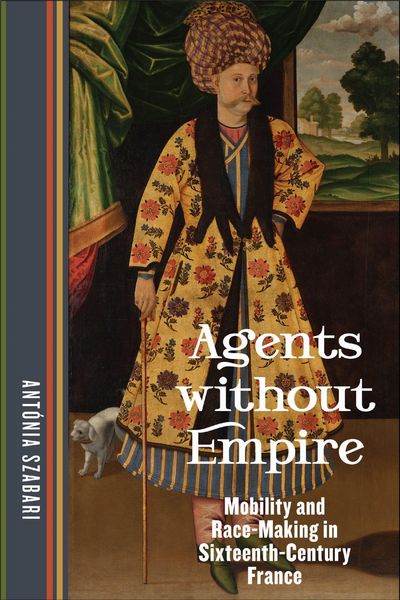
Agents Without Empire Mobility and Race-Making in Sixteenth-Century France
-
- Englisch ausgewählt
Fr. 171.00
inkl. gesetzl. MwSt.,
Beschreibung
Produktdetails
Einband
Gebundene Ausgabe
Erscheinungsdatum
05.03.2024
Verlag
Fordham University PressSeitenzahl
288
Maße (L/B/H)
22.9/15.2/2.1 cm
Gewicht
594 g
Sprache
Englisch
ISBN
978-1-5315-0666-7
It is well known that Renaissance culture gave an empowering role to the individual and thereby to agency. But how does race factor into this culture of empowerment? Canonical French authors like Rabelais and Montaigne have been celebrated for their flexible worldviews and interest in the difference of non-French cultures both inside and outside of Europe. As a result, this period in French cultural history has come to be valued as an exceptional era of cultural opening toward others. Agents without Empire shows that such a celebration is, at the very least, problematic.
Szabari argues that before the rise of the French colonial empire, medieval categories of race based on the redemption story were recast through accounts of the Ottoman Empire that were made accessible, in a sudden and unprecedented manner, to agents of the French crown. Spying performed by Frenchmen in the Ottoman Empire in the sixteenth century permeated French culture in large part because those who spied also worked as knowledge producers, propagandists, and artists. The practice changed what it meant to be cultured and elite by creating new avenues of race- and gender-specific consumption for French and European men that affected all areas of sophisticated culture including literature, politics, prints, dressing, personal hygiene, and leisure.
Agents without Empire explores race making in this period of European history in the context of diplomatic reposts, travel accounts, natural history, propaganda, religious literature, poetry, theater, fiction, and cheap print. It intervenes in conversations in whiteness studies, race theory, theories of agency and matter, and the history of diplomacy and spying to offer a new account of race making in early modern Europe.
Kundinnen und Kunden meinen
Verfassen Sie die erste Bewertung zu diesem Artikel
Helfen Sie anderen Kund*innen durch Ihre Meinung