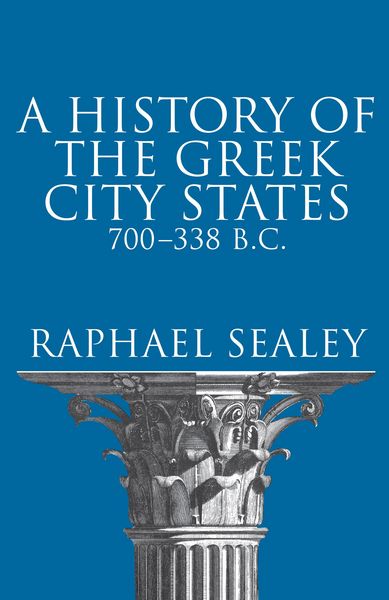
A History of the Greek City States, 700-338 B. C.
Fr. 31.90
inkl. gesetzl. MwSt.Beschreibung
Produktdetails
Format
ePUB
Kopierschutz
Nein
Family Sharing
Nein
Text-to-Speech
Ja
Erscheinungsdatum
01.09.2023
Verlag
Kensington BooksSeitenzahl
544 (Printausgabe)
Auflage
1. Auflage
Sprache
Englisch
EAN
9780520342750
This book introduces the reader to the serious study of Greek history, concentrating more on problems than on narrative. The topics selected have been prominent in modern research and references to important discussions of these have been provided. Outlined are controversial issues of which differing views can be defended. Mr. Sealey's preference is for interpretations which see Greek history as the interaction of personalities, rather than for those which see it as a struggle for economic classes or of abstract ideas.
Sealey assumes that the Greek cities of the archaic and classical periods did not inherit any political institutions from the Bronze Age; that the extensive invasions that brought Mycenaean civilization to an end destroyed political habits as effectively as stone palaces. Accordingly, he believes that the Greeks of the historic period were engaged in the fundamental enterprise of building organized society out of nothing.
The first chapters of this work deal with the stops taken by the early tyrants, in Sparta and Athens, toward constructing stable organs of authority and of political expression. In later chapters, interest shifts to relations that developed between the states and especially to the development of lasting alliances. Attention is given to the Peloponnesian League, to the Persian Wars, to the Delian League, and to the Second Athenian Sea League of the fourth century.
This book introduces the reader to the serious study of Greek history, concentrating more on problems than on narrative. The topics selected have been prominent in modern research and references to important discussions of these have been provided. Outlin
Sealey assumes that the Greek cities of the archaic and classical periods did not inherit any political institutions from the Bronze Age; that the extensive invasions that brought Mycenaean civilization to an end destroyed political habits as effectively as stone palaces. Accordingly, he believes that the Greeks of the historic period were engaged in the fundamental enterprise of building organized society out of nothing.
The first chapters of this work deal with the stops taken by the early tyrants, in Sparta and Athens, toward constructing stable organs of authority and of political expression. In later chapters, interest shifts to relations that developed between the states and especially to the development of lasting alliances. Attention is given to the Peloponnesian League, to the Persian Wars, to the Delian League, and to the Second Athenian Sea League of the fourth century.
This book introduces the reader to the serious study of Greek history, concentrating more on problems than on narrative. The topics selected have been prominent in modern research and references to important discussions of these have been provided. Outlin
Kundinnen und Kunden meinen
Verfassen Sie die erste Bewertung zu diesem Artikel
Helfen Sie anderen Kund*innen durch Ihre Meinung