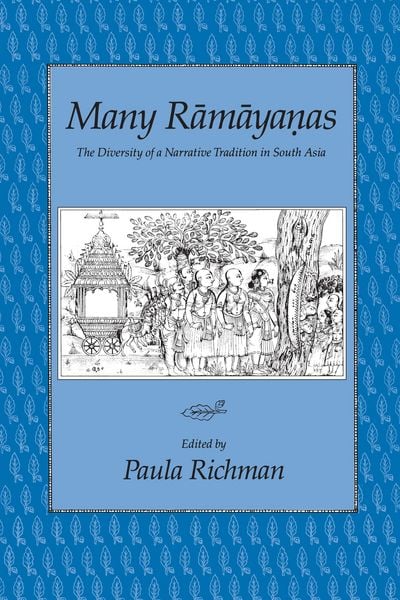
Many Ramayanas The Diversity of a Narrative Tradition in South Asia
-
- Taschenbuch
- eBook ausgewählt
-
Form:Einzelkauf Download
-
Sprache:Englisch
Fr. 33.90
inkl. gesetzl. MwSt.Beschreibung
Produktdetails
Format
ePUB
Kopierschutz
Nein
Family Sharing
Nein
Text-to-Speech
Ja
Erscheinungsdatum
01.09.2023
Herausgeber
Paula RichmanVerlag
Kensington BooksSeitenzahl
280 (Printausgabe)
Auflage
1. Auflage
Sprache
Englisch
EAN
9780520911758
Throughout Indian history, many authors and performers have produced, and many patrons have supported, diverse tellings of the story of the exiled prince Rama, who rescues his abducted wife by battling the demon king who has imprisoned her. The contributors to this volume focus on these "many" Ramayanas.
While most scholars continue to rely on Valmiki's Sanskrit Ramayana as the authoritative version of the tale, the contributors to this volume do not. Their essays demonstrate the multivocal nature of the Ramayana by highlighting its variations according to historical period, political context, regional literary tradition, religious affiliation, intended audience, and genre. Socially marginal groups in Indian society-Telugu women, for example, or Untouchables from Madhya Pradesh-have recast the Rama story to reflect their own views of the world, while in other hands the epic has become the basis for teachings about spiritual liberation or the demand for political separatism. Historians of religion, scholars of South Asia, folklorists, cultural anthropologists-all will find here refreshing perspectives on this tale.
Throughout Indian history, many authors and performers have produced, and many patrons have supported, diverse tellings of the story of the exiled prince Rama, who rescues his abducted wife by battling the demon king who has imprisoned her. The contributo
While most scholars continue to rely on Valmiki's Sanskrit Ramayana as the authoritative version of the tale, the contributors to this volume do not. Their essays demonstrate the multivocal nature of the Ramayana by highlighting its variations according to historical period, political context, regional literary tradition, religious affiliation, intended audience, and genre. Socially marginal groups in Indian society-Telugu women, for example, or Untouchables from Madhya Pradesh-have recast the Rama story to reflect their own views of the world, while in other hands the epic has become the basis for teachings about spiritual liberation or the demand for political separatism. Historians of religion, scholars of South Asia, folklorists, cultural anthropologists-all will find here refreshing perspectives on this tale.
Throughout Indian history, many authors and performers have produced, and many patrons have supported, diverse tellings of the story of the exiled prince Rama, who rescues his abducted wife by battling the demon king who has imprisoned her. The contributo
Kundinnen und Kunden meinen
Verfassen Sie die erste Bewertung zu diesem Artikel
Helfen Sie anderen Kund*innen durch Ihre Meinung