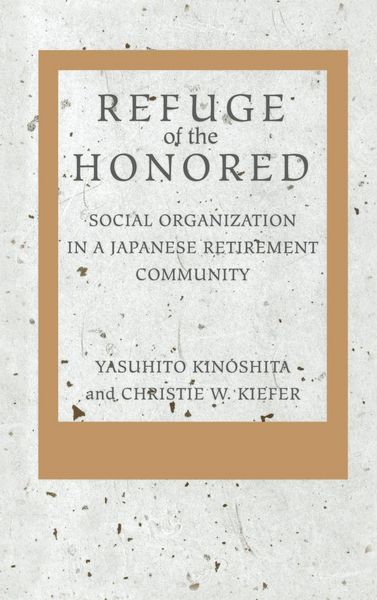
Refuge of the Honored Social Organization in a Japanese Retirement Community
Fr. 68.90
inkl. gesetzl. MwSt.Beschreibung
Produktdetails
Format
ePUB
Kopierschutz
Nein
Family Sharing
Nein
Text-to-Speech
Ja
Erscheinungsdatum
01.09.2023
Verlag
Mayo Clinic PressSeitenzahl
232 (Printausgabe)
Auflage
1. Auflage
Sprache
Englisch
EAN
9780520911789
Faced with the decline of the traditional family and the explosive growth of the over-65 population, the Japanese are looking for new ways to care for their elders. This timely study documents the birth of a major social phenomenon in Japan-the planned retirement community.
In the mid-1980s, Yasuhito Kinoshita spent a year living in Japan's first such community, Fuji-no-Sato. His collaboration with Christie W. Kiefer, a cultural gerontologist, is the first detailed study of a retirement community in a non-Western culture.
Fuji-no-Sato is a social community with no visible traditions. Kinoshita and Kiefer show that its residents' preference for long-established relationships creates the need for the invention of relationships that have no precedent in Japanese society.
This book reveals much about Japanese culture, and about the "graying of society" that plagues the newly industrialized countries of Asia. Its lessons about sensitivity to the elderly's values and the need for clear communication have important applications in other cultures as well.
Faced with the decline of the traditional family and the explosive growth of the over-65 population, the Japanese are looking for new ways to care for their elders. This timely study documents the birth of a major social phenomenon in Japan-the planned re
In the mid-1980s, Yasuhito Kinoshita spent a year living in Japan's first such community, Fuji-no-Sato. His collaboration with Christie W. Kiefer, a cultural gerontologist, is the first detailed study of a retirement community in a non-Western culture.
Fuji-no-Sato is a social community with no visible traditions. Kinoshita and Kiefer show that its residents' preference for long-established relationships creates the need for the invention of relationships that have no precedent in Japanese society.
This book reveals much about Japanese culture, and about the "graying of society" that plagues the newly industrialized countries of Asia. Its lessons about sensitivity to the elderly's values and the need for clear communication have important applications in other cultures as well.
Faced with the decline of the traditional family and the explosive growth of the over-65 population, the Japanese are looking for new ways to care for their elders. This timely study documents the birth of a major social phenomenon in Japan-the planned re
Kundinnen und Kunden meinen
Verfassen Sie die erste Bewertung zu diesem Artikel
Helfen Sie anderen Kund*innen durch Ihre Meinung