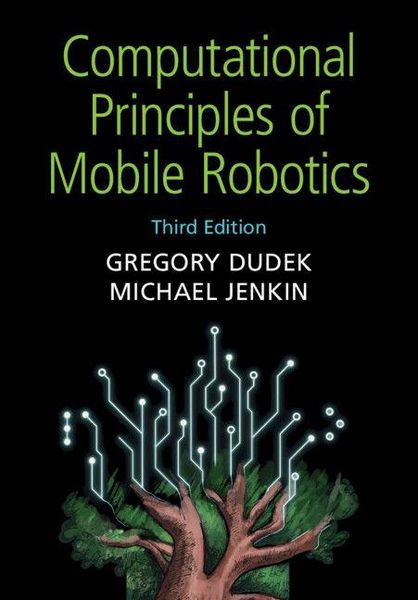
Computational Principles of Mobile Robotics
-
- Hardcover ausgewählt
- Taschenbuch
- eBook
-
Sprache:Englisch
-
Verlag:Cambridge Academic
Fr. 182.00
inkl. gesetzl. MwSt.,
Beschreibung
Produktdetails
Einband
Gebundene Ausgabe
Erscheinungsdatum
12.01.2024
Verlag
Cambridge AcademicSeitenzahl
450
Maße (L/B/H)
26/18.3/2.9 cm
Gewicht
1016 g
Sprache
Englisch
ISBN
978-1-108-49847-0
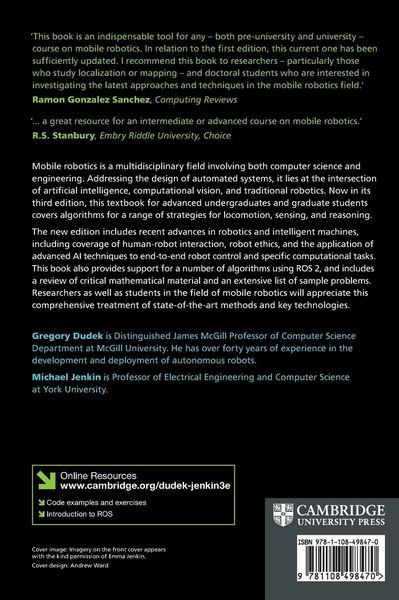
Now in its third edition, this textbook is a comprehensive introduction to the multidisciplinary field of mobile robotics, which lies at the intersection of artificial intelligence, computational vision, and traditional robotics. Written for advanced undergraduates and graduate students in computer science and engineering, the book covers algorithms for a range of strategies for locomotion, sensing, and reasoning. The new edition includes recent advances in robotics and intelligent machines, including coverage of human-robot interaction, robot ethics, and the application of advanced AI techniques to end-to-end robot control and specific computational tasks. This book also provides support for a number of algorithms using ROS 2, and includes a review of critical mathematical material and an extensive list of sample problems. Researchers as well as students in the field of mobile robotics will appreciate this comprehensive treatment of state-of-the-art methods and key technologies.
Noch keine Bewertungen vorhanden
Verfassen Sie die erste Bewertung zu diesem Artikel
Helfen Sie anderen Kundinnen und Kunden durch Ihre Meinung.