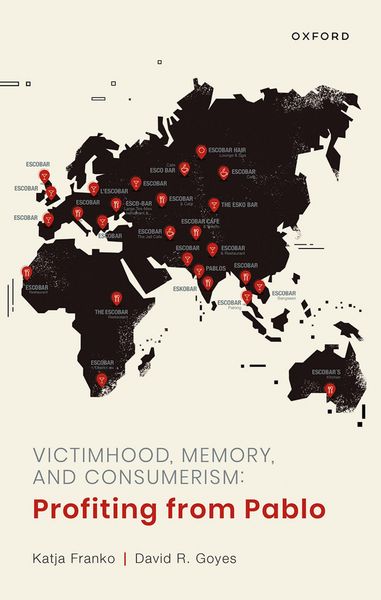
Victimhood, Memory, and Consumerism Profiting from Pablo
-
Form:Einzelkauf Download
-
Sprache:Englisch
-
eBook Format:PDF
- PDF Fr. 27.90 ausgewählt
- ePUB Fr. 27.90
Fr. 27.90
inkl. gesetzl. MwSt.Beschreibung
Produktdetails
Format
Kopierschutz
Ja
Family Sharing
Nein
Text-to-Speech
Nein
Erscheinungsdatum
21.08.2023
Verlag
OUP eBookSeitenzahl
200 (Printausgabe)
Dateigröße
12038 KB
Sprache
Englisch
EAN
9780192874122
Inhabitants of Medellín, Colombia, suffered from the war-like violence perpetrated by drug cartels and other actors in the 1980s and 1990s. Thousands died, including innocent civilians, judges, and journalists, many more were injured and suffered psychological trauma. Three decades later, however, transnational media companies such as Netflix have transformed the traumatic memories into entertainment while the main perpetrator, Pablo Escobar, became a recognizable brand name. Even as global audiences are captivated by Escobar's life and myth, his victims' stories fade into oblivion. Victimhood, Memory, and Consumerism: Profiting from Pablo documents the story of violence inflicted on Medellín, and critically examines the status of its victims. Drawing on unique empirical material, the book addresses the impact of commercial exploitation of the city's violent past on the victims of mass drug violence and on the present nature of the city. To demonstrate the magnitude of the profits made from the legacy of Pablo Escobar, the authors cover a range of topics. First, they discuss the appropriation by commercial forces of the city's traumatic past for the purposes of entertainment; second, they describe Escobar tours, souvenirs, and other collectibles offered by Medellín's tourism industry; and, lastly, they expose the less visible gains reaped by political and social actors who participate in the global mythmaking surrounding Escobar. Through interviews with those directly affected by drug violence, the authors show that these cultural forces have immediate symbolic and material consequences. Victimhood, Memory, and Consumerism offers a poignant critique of the role of the global market economy in the unequal distribution of narrative power among those engaged in processes of collective memory construction. The book aims, more broadly, at addressing an issue that has so far been neglected in the disciplines of criminology, international criminal justice, and victimology, namely the status of victims of large-scale drug violence. A thoroughly compelling read, this volume will appeal internationally to academics in criminology and victimology, as well as those interested in critical perspectives on Netflix, commercialism, and Colombian history.
Kundinnen und Kunden meinen
Verfassen Sie die erste Bewertung zu diesem Artikel
Helfen Sie anderen Kund*innen durch Ihre Meinung