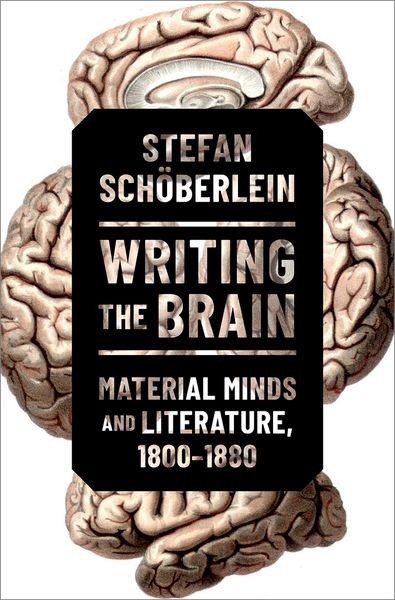
Writing the Brain Material Minds and Literature, 1800-1880
-
Form:Einzelkauf Download
-
Sprache:Englisch
-
eBook Format:ePUB
- PDF Fr. 59.90
- ePUB Fr. 59.90 ausgewählt
Fr. 59.90
inkl. gesetzl. MwSt.Beschreibung
Produktdetails
Format
ePUB
Kopierschutz
Ja
Family Sharing
Nein
Text-to-Speech
Ja
Erscheinungsdatum
05.09.2023
Verlag
OUP eBookSeitenzahl
(Printausgabe)
Dateigröße
12636 KB
Sprache
Englisch
EAN
9780197693698
In the nineteenth century, American and British culture experienced an explosion of interest in writings about the brain. The years between 1800 and 1880 are often described as the emergence of modern neuroscience, with new areas of the brain being discovered and named. Naming was quickly followed by a drive to hypothesize functioning, a process that suggested thinking itself may be a mere physiological act. In Writing the Brain, Stefan Schöberlein tracks how literature encountered such novel, scientific theories of cognition-and how it, in turn, shaped scientific thinking. Before the era of modern psychology, a heterogeneous group of alienists, self-help gurus, and anatomists proposed that the structure of the brain could be used to explain how the mind worked. Suddenly, nineteenth-century readers and writers had to contend with the idea that qualities once ascribed to disembodied souls may arise from a mere lump of cranial matter. In a period when scientists and literary writers frequently published in the same periodicals, the ensuing debate over the material mind was a public one. Writing the Brain demonstrates, by examining several canonical works and textual rediscoveries, that these exchanges not only influenced how poets and novelists fictionalized the mind but also how scientists thought and talked about their discoveries. From George Combe to Charles Dickens, from Emily Dickinson to Pliny Earle, from Benjamin Rush to Alfred Tennyson, 1800s debated what it means to have or, rather, be a brain.
Kundinnen und Kunden meinen
Verfassen Sie die erste Bewertung zu diesem Artikel
Helfen Sie anderen Kund*innen durch Ihre Meinung