Produktbild: States of Anxiety

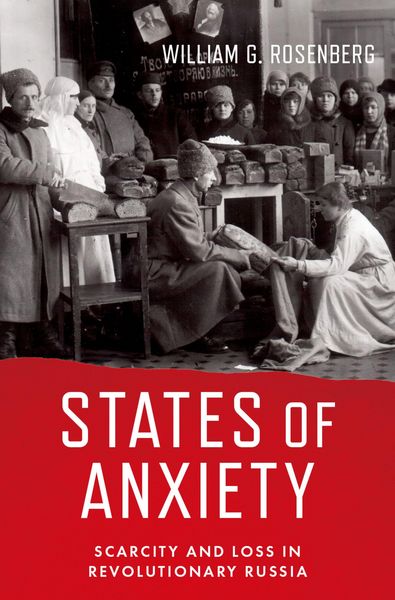
States of Anxiety Scarcity and Loss in Revolutionary Russia

Fr. 56.90

inkl. gesetzl. MwSt., Versandkostenfrei


Beschreibung

Produktdetails

Einband

Gebundene Ausgabe

Erscheinungsdatum

20.10.2023

Abbildungen

33 b/w illustrations

Verlag

Oxford University Press

Seitenzahl

600

Maße (L/B/H)

22.6/16.3/6.9 cm

Gewicht

998 g

Sprache

Englisch

ISBN

978-0-19-761015-2

Beschreibung

Produktdetails

Einband

Gebundene Ausgabe

Erscheinungsdatum

20.10.2023

Abbildungen

33 b/w illustrations

Verlag

Oxford University Press

Seitenzahl

600

Maße (L/B/H)

22.6/16.3/6.9 cm

Gewicht

998 g

Sprache

Englisch

ISBN

978-0-19-761015-2

Herstelleradresse

Libri GmbH
Europaallee 1
36244 Bad Hersfeld
DE

Email: gpsr@libri.de

Kundinnen und Kunden meinen

0 Bewertungen

Informationen zu Bewertungen

Zur Abgabe einer Bewertung ist eine Anmeldung im Konto notwendig. Die Authentizität der Bewertungen wird von uns nicht überprüft. Wir behalten uns vor, Bewertungstexte, die unseren Richtlinien widersprechen, entsprechend zu kürzen oder zu löschen.

Die Bewertungen sind nach Format, Anzahl Sterne und Datum sortiert.

Verfassen Sie die erste Bewertung zu diesem Artikel

Helfen Sie anderen Kund*innen durch Ihre Meinung

Kundinnen und Kunden meinen

0 Bewertungen filtern

Die Leseprobe wird geladen.
  • Produktbild: States of Anxiety
    • INTRODUCTION: "BEYOND THE GREAT STORIES" OF RUSSIA'S WAR AND REVOLUTION

    • PART I: THE IMPERIAL MEANINGS OF SCARCITY AND LOSS

    • Chap. 1: "FIGHTING WITH GOD" AND THE LANGUAGES OF LOSS

    • Assessing Patriotism

    • Surveilling Loyalty

    • Early Losses and their Implications

    • At the Front: The Shocks of War

    • Reading Soldiers' Moods

    • Military Censorship and the Galician Disaster

    • Chap. 2, WAS RUSSIA PREPARED?

    • "Embedded" Underdevelopment, Russia's Peasants, and the Market Problem

    • Fault Lines of Economic Mobilization

    • Russia's Railroad Lifeline

    • The Strains of State Finance

    • Assessing Loss

    • Chap. 3: "DYING OF HUNGER": REPRESENTATIONS AND REALITIES OF SCARCITY

    • Early Voices of "Extreme Need"

    • The Military Zone of Violence

    • "Dying of Hunger": Procurements, Prices, and the Rising Cost of Living

    • "Extreme Need" in the Workplace

    • Food Insecurities and the "Baba" Question

    • Chap. 4: EMPOWERING "RESPONSIBLE PUBLICS" AND THE EMERGENCE OF WAR CAPITALISM

    • War Industries Committees and the Special Councils

    • Devolving Authority, Engaging the Localities

    • The Progressive Bloc and the Question of Autocratic Power

    • Funding Production, Regulating Distribution

    • Contesting Authorities: The Emissary Problem

    • Militarization vs. Mediation: The "Workers Question"

    • War Capitalism and its Cultures

    • Rising Anxieties with the Coming of Winter

    • Chap. 5: SEEKING SOLUTIONS, DROWNING IN BLOOD

    • Narratives of Mismanagement and Malfeasance from Below in the Winter and Spring of 1916

    • The Contending Story of Confusion and Chaos from Above

    • The Vexing Problems of Rationing and Fixed Prices

    • State Finance as a "Bacchanalia of Corruption"

    • Political Dilemmas

    • Scarcity, Railroads, and the Labor Question: Militarization as Solution

    • "Brusilov's "Breakthrough" as Tragic Romance

    • The Soldiers' Story: "Drowning in Blood"

    • Chap. 6: SCRIPTING REVOLUTION

    • "Literally Facing Starvation"

    • Extending Compulsory Labor: From World War to Civil War

    • The Rittikh Confiscation

    • Subsistence Protests and the October Strikes

    • Russia's Revolutionary Situation

    • Scripting the Revolution

    • PART II: REVOLUTIONARY IMPERATIVES

    • Chap. 7: "RESPONSIBLE MEN IN WHOM THE COUNTRY HAS CONFIDENCE": THE CHALLENGES OF REVOLUTIONARY GOVERNANCE

    • Writing the "Truth" in the Third Winter of War

    • Scarcity and Anxiety on the Home Front

    • Uprising, Insurrection, Revolution,

    • Locations and Forms of Power and Questions of Political Legitimacy

    • Scarcity and Social Identity

    • Loss and the Meanings of War

    • The Challenges of Revolutionary Governance

    • Chap. 8: ASSESSING SCARCITY, CONFRONTING LOSS

    • Food Anxiety and the Grain Monopoly: Legitimacy, and Function

    • Food Supply, Land Redistribution, and Democratic Practice

    • Democratizing the Railroads and the Concept of "Statization"

    • Controlling the Cost of Living: Revolutionary State Finances, War Capitalism, and the Liberty Loan

    • Giving Meaning to Loss: Politics, Passions, and the April Crisis

    • Chap. 9: SOCIAL CONFLICT, MEDIATION AND THE REVOLUTIONARY STATE

    • Politics and the First Coalition

    • Coalition Governance and the Weighty Actor Thesis

    • Seeking Security and Dignity in the Spring Strike Wave

    • The Ministry of Labor as a Site of Mediation

    • Activism in the Countryside

    • Once More "On the Brink of Catastrophe"

    • Chap. 10: "SLAUGHTER" AT THE FRONT, THE JULY INSURRECTION AND A "GOVERNMENT TO SAVE THE REVOLUTION"

    • Brusilov Redux: The Kerensky's Offensive

    • Threats to Great Russia and the Liberals' Retreat

    • The July Insurrection

    • The "Real Demands of Russian Life"

    • The "Government to Save the Revolution"

    • Once Again "On the Brink of Catastrophe"

    • Chap. 11: THE COLLAPSE OF WAR CAPITALISM

    • Village Sovereignty

    • Who Owns the Workplace?

    • Summer Strikes

    • Beleaguered Ministries: Labor, Trade and Industry, and Finance

    • War Capitalism and the Revolutionary State

    • Chap. 12: DEMOCRATIC PREDICAMENTS AND THE BOLSHEVIK COUP

    • Scarcity, Loss, and Politics at the Moscow State Conference

    • Kornilov, the Front, and the Countryside

    • "Radical Dictatorships," Autonomous Nationalities

    • The Railroad Republic

    • The Anxieties and Predicaments of October

    • PART III: FROM WORLD WAR TO TOTAL WAR: SCARCITY, LOSS, AND DYSFUNCTIONAL DICTATORSHIPS AFTER OCTOBER

    • Chap. 13: CIRCUMSTANCE, IDEOLOGY AND BOLSHEVIK POWER

    • Rhetoric, Realities, and the Limits of Bolshevik Power

    • Illusions of Peace

    • Land and Bread as Metaphors of Hope

    • Nationalization from Below, Refinancing Production from Above, Repudiating Debt

    • "Still Starving" Workers and Increasingly Hungry Peasants

    • Dictatorship as the Primary Task of Soviet Power

    • Chap. 14: "OUR LIVES HAVE BECOME UNBEARABLE!": DICTATORSHIPS IN THE "FIGHT AGAINST HUNGER"

    • Extreme Need as Counter-Revolution

    • Once Again, "The Revolution is in Danger!":

    • Once Again, Mobilizing New "Solutions"

    • Scarcity and the Anti-Bolshevik Dictatorships

    • The Bolsheviks' "Fight against Hunger"

    • The Normalization of Concealment

    • Losing the "Hunger War"

    • Chap. 15: VIOLENCE, LOSS, AND THE COLLAPSE OF WAR COMMUNISM

    • "Vectors of Social Violence"

    • Scarcity, Loss, and the Trauma Question

    • Losing Great Russia: Paramilitary Violence and the Defeat of the Whites

    • The Fight against Desertion

    • Rabkrin and the Obligation to Work

    • "All for Transport": Tsektran and the Labor Armies

    • The Collapse of War Communism: "Bolshevism without the Bolsheviks"

    • EPILOGUE: SCARCITY, LOSS, AND SOVIET HISTORY

    • Soviet Russia's Long Civil War

    • Stalin's Assaults and Soviet "Redemption"

    • Loss and Scarcity after the "Great Patriotic Struggle"

    • Challenges and Adaptations: The Thaw, Reform, Stability, and Stagnation

    • Archiving the Soviet Great Story

    • BIBLIOGRAPHY OF CITED SOURCES

    • NOTES

    • INDEX