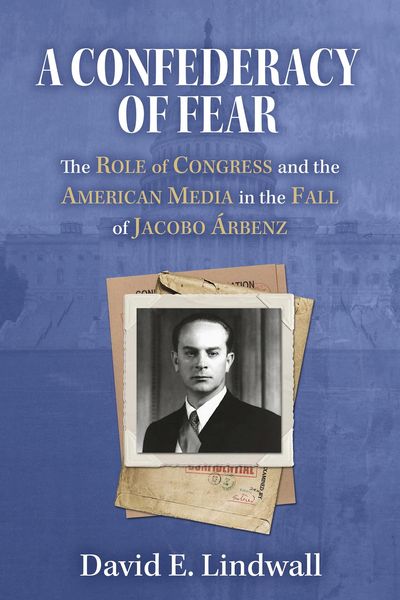
Confederacy of Fear The Role of Congress and the American Media in the Fall of Jacobo Árbenz
-
- Einzelkauf Download ausgewählt
-
Sprache:Englisch
Fr. 18.90
inkl. gesetzl. MwSt.Beschreibung
Produktdetails
Format
ePUB
Kopierschutz
Ja
Family Sharing
Ja
Text-to-Speech
Ja
Erscheinungsdatum
07.07.2023
Verlag
BookbabySeitenzahl
(Printausgabe)
Sprache
Englisch
EAN
9798350906554
"A Confederacy of Fear" examines the developments that led American legislators and journalists to see the reformist regime of Guatemalan President Jacobo Árbenz Guzmán (1951-1954) as a beachhead for international communism in the Western Hemisphere and an existential threat to American democracy. It draws on the archives of prominent Senators and Congressmen; press accounts; Guatemalan and American print sources; and the declassified files of the CIA, State Department, and Congress to provide a narrative of the vital role Congress and the Press played in pressuring Presidents Truman and Eisenhower to act against Árbenz.This book draws heavily on the statements made by Senators and Congressmen on the floor of Congress and to members of the media regarding their fears, amplified by the Korean War and communist adventurism in Eastern Europe and Indo-China, that Guatemala was falling behind the Iron Curtain. Each development in Guatemala was analyzed by American legislators and news reporters through the lens of the confrontation with the Soviet Union and China across the globe. Letters from constituents retrieved from the personal archives of Senators and Congressmen show how Americans in the heartland feared that the potential installation of a pro-Soviet regime in Guatemala would lead to communists knocking at their front doors.While rivers of ink have been spilled on the subject of the Guatemalan revolution of 1954, no author has approached this essential Cold War narrative specifically from the perspective of Congress and the American media. This gap in the Árbenz story has led to an incomplete understanding of Truman and Eisenhower''s motivation to remove Árbenz and a misreading of the role Congress has in shaping foreign policy then and now.
Kundinnen und Kunden meinen
Verfassen Sie die erste Bewertung zu diesem Artikel
Helfen Sie anderen Kund*innen durch Ihre Meinung