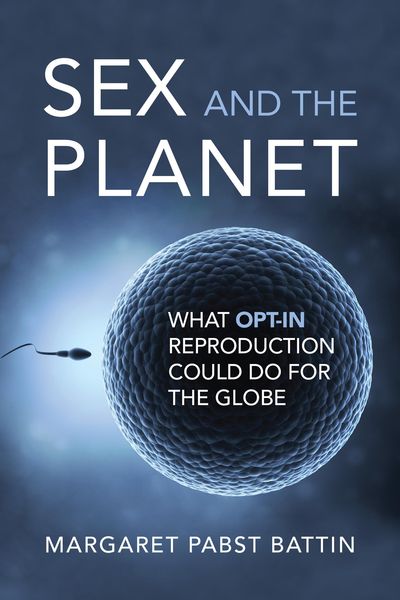
Sex and the Planet What Opt-In Reproduction Could Do for the Globe
-
- Taschenbuch
- eBook ausgewählt
-
Form:Einzelkauf Download
-
Sprache:Englisch
Fr. 37.90
inkl. gesetzl. MwSt.Beschreibung
Produktdetails
Format
ePUB 3
Kopierschutz
Ja
Family Sharing
Ja
Text-to-Speech
Ja
Erscheinungsdatum
28.05.2024
Verlag
Mit PressSeitenzahl
254 (Printausgabe)
Dateigröße
17459 KB
Sprache
Englisch
EAN
9780262378529
What if human reproduction was always elective? A prominent bioethicist speculates about the possibilities-and the likely consequences.
What would the world be like if all pregnancy was intended, not unintended as it is nearly half the time now? Considerably better, Margaret Pabst Battin suggests in Sex and the Planet, a provocative thought experiment with far-reaching real-world implications. Many of the world's most vexing and seemingly intractable issues begin with sex-when sperm meets egg, as Battin puts it-abortion, adolescent pregnancy, high-risk pregnancy, sexual violence, population growth and decline. Rethinking reproductive rights and exposing our many mistaken assumptions about sex, Sex and the Planet offers an optimistic picture of how we might solve these problems-by drastically curtailing unintended pregnancies using currently available methods.
How we see this picture-as recommendation, prediction, utopian fantasy, totalitarian plot, hypothetical conjecture, or realistic solution-depends to a great degree on which of thirteen problematic assumptions we maintain, assumptions Battin works to identify and challenge. Taking on sensitive topics like abortion and rape and religious issues around contraception, she shows how a fully informed, nonideological approach could defuse much of the friction such issues tend to generate. Also, in her attention to male contraception and the asymmetry of female and male reproductive control, she pulls in the 50 percent of the human race-those with Y chromosomes-largely left out of discussions of reproductive health. Sex and the Planet, finally, takes a global view, inviting us to consider a possible-even plausible-reproductive future.
What would the world be like if all pregnancy was intended, not unintended as it is nearly half the time now? Considerably better, Margaret Pabst Battin suggests in Sex and the Planet, a provocative thought experiment with far-reaching real-world implications. Many of the world's most vexing and seemingly intractable issues begin with sex-when sperm meets egg, as Battin puts it-abortion, adolescent pregnancy, high-risk pregnancy, sexual violence, population growth and decline. Rethinking reproductive rights and exposing our many mistaken assumptions about sex, Sex and the Planet offers an optimistic picture of how we might solve these problems-by drastically curtailing unintended pregnancies using currently available methods.
How we see this picture-as recommendation, prediction, utopian fantasy, totalitarian plot, hypothetical conjecture, or realistic solution-depends to a great degree on which of thirteen problematic assumptions we maintain, assumptions Battin works to identify and challenge. Taking on sensitive topics like abortion and rape and religious issues around contraception, she shows how a fully informed, nonideological approach could defuse much of the friction such issues tend to generate. Also, in her attention to male contraception and the asymmetry of female and male reproductive control, she pulls in the 50 percent of the human race-those with Y chromosomes-largely left out of discussions of reproductive health. Sex and the Planet, finally, takes a global view, inviting us to consider a possible-even plausible-reproductive future.
Kundinnen und Kunden meinen
Verfassen Sie die erste Bewertung zu diesem Artikel
Helfen Sie anderen Kund*innen durch Ihre Meinung