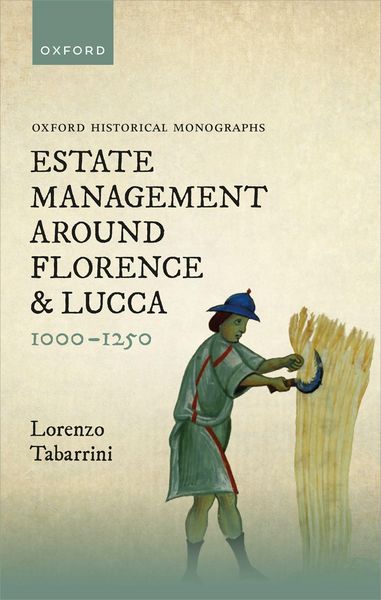
Estate Management around Florence and Lucca 1000-1250
-
Form:Einzelkauf Download
-
Sprache:Englisch
-
eBook Format:PDF
- PDF Fr. 89.90 ausgewählt
- ePUB Fr. 89.90
Fr. 89.90
inkl. gesetzl. MwSt.Beschreibung
Produktdetails
Format
Kopierschutz
Ja
Family Sharing
Nein
Text-to-Speech
Nein
Erscheinungsdatum
30.08.2023
Verlag
OUP eBookSeitenzahl
288 (Printausgabe)
Dateigröße
13528 KB
Sprache
Englisch
EAN
9780198875161
This book examines the forms of estate management in the countryside of Florence and Lucca between the eleventh and the middle of the thirteenth centuries. It argues that their change reflects wider transformations of medieval economic patterns, and specifically the surge in overall demand that occurred in the decades bridging the twelfth and the thirteenth centuries.
The reasons for a comparison between the Florentine and the Lucchese countryside lie in the alleged differences of their historical evolution--as it has been outlined by scholars so far. The so-called manorial system (sistema curtense) is believed to have ceased to exist in the Lucchesia around the beginning of the tenth century, whereas in the Fiorentino its disappearance can be dated to the early thirteenth century. Similarly, the Florentine countryside is generally regarded as the birthplace of a particular type of sharecropping regime, the mezzadria poderale, which spread over much of central Italy during the fifteenth and sixteenth centuries and would later become an essential component of Italian agrarian identity. On the contrary, the mezzadria poderale is thought to have never developed at any point in the history of medieval and early modern Lucchesia--and this was indeed the case with all the coastal areas of Tuscany. The book endeavours to examine the characteristics of estate management in the central Middle Ages in their own right; that is to say, by detaching those transformations from any teleological view, and by placing them within the economic and sociopolitical context of the period 1000-1250.
The reasons for a comparison between the Florentine and the Lucchese countryside lie in the alleged differences of their historical evolution--as it has been outlined by scholars so far. The so-called manorial system (sistema curtense) is believed to have ceased to exist in the Lucchesia around the beginning of the tenth century, whereas in the Fiorentino its disappearance can be dated to the early thirteenth century. Similarly, the Florentine countryside is generally regarded as the birthplace of a particular type of sharecropping regime, the mezzadria poderale, which spread over much of central Italy during the fifteenth and sixteenth centuries and would later become an essential component of Italian agrarian identity. On the contrary, the mezzadria poderale is thought to have never developed at any point in the history of medieval and early modern Lucchesia--and this was indeed the case with all the coastal areas of Tuscany. The book endeavours to examine the characteristics of estate management in the central Middle Ages in their own right; that is to say, by detaching those transformations from any teleological view, and by placing them within the economic and sociopolitical context of the period 1000-1250.
Kundinnen und Kunden meinen
Verfassen Sie die erste Bewertung zu diesem Artikel
Helfen Sie anderen Kund*innen durch Ihre Meinung