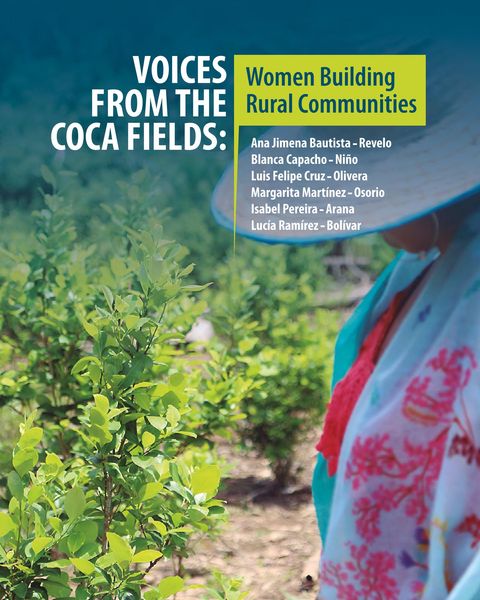
Voices from the Coca Fields Women Building Rural Communities
-
- Einzelkauf Download ausgewählt
-
Sprache:Englisch
Fr. 5.50
inkl. gesetzl. MwSt.Beschreibung
Produktdetails
Format
Kopierschutz
Ja
Family Sharing
Ja
Text-to-Speech
Nein
Erscheinungsdatum
30.03.2021
Verlag
DejusticiaSeitenzahl
198 (Printausgabe)
Dateigröße
16090 KB
Sprache
Englisch
EAN
9789585597587
Colombia's response to the country's drug problem has been based on the repression of the weakest links in the drug chain-namely consumers and small farmers-which has led to disproportionate rates of imprisonment and has involved a heavy focus on forced crop eradication. Not only has such an approach failed to effectively control the cocaine market, but it has also unleashed harmful side effects in terms of security, social development, and human rights as they concern communities in coca-growing areas. Moreover, although scholars and practitioners have analyzed Colombia's drug problem from a variety of perspectives, these efforts have tended to overlook women's experiences.
This report explores the ways that rural norms, gender structures, the armed conflict, and illegal markets have played out in the lives of women coca growers in Colombia's Andes-Amazon region, an area distinguished by the presence of illegal armed groups, violence, poverty, and weak state institutions. In this region of Colombia, coca cultivation has offered an important source of income for rural families, which in turn has affected women's roles in society and has placed them in a vulnerable position vis- à-vis armed actors.
The Andes-Amazon region is an area where the country's war on drugs and its armed conflict converged and unmasked the gender structures dominating the countryside. These structures affected rural women in various ways: through everyday violence, the fumigation of illicit and licit crops alike, and women's stigmatization due to their involvement in an illegal trade. But coca was also a source of livelihood that helped them attain economic independence and gave them the ability to improve their well-being and that of their families.
The recent peace accord signed between the Colombian government and the country's main guerrilla group represents a historic opportunity to learn from past mistakes in terms of the illicit crop problem and the social and political demands of coca-growing communities. Against this backdrop, it is time to recognize the contributions that women coca growers have made in both the public and the private spheres toward the construction of a peaceful countryside in the most remote and forgotten regions of the country.
This report explores the ways that rural norms, gender structures, the armed conflict, and illegal markets have played out in the lives of women coca growers in Colombia's Andes-Amazon region, an area distinguished by the presence of illegal armed groups, violence, poverty, and weak state institutions. In this region of Colombia, coca cultivation has offered an important source of income for rural families, which in turn has affected women's roles in society and has placed them in a vulnerable position vis- à-vis armed actors.
The Andes-Amazon region is an area where the country's war on drugs and its armed conflict converged and unmasked the gender structures dominating the countryside. These structures affected rural women in various ways: through everyday violence, the fumigation of illicit and licit crops alike, and women's stigmatization due to their involvement in an illegal trade. But coca was also a source of livelihood that helped them attain economic independence and gave them the ability to improve their well-being and that of their families.
The recent peace accord signed between the Colombian government and the country's main guerrilla group represents a historic opportunity to learn from past mistakes in terms of the illicit crop problem and the social and political demands of coca-growing communities. Against this backdrop, it is time to recognize the contributions that women coca growers have made in both the public and the private spheres toward the construction of a peaceful countryside in the most remote and forgotten regions of the country.
Kundinnen und Kunden meinen
Verfassen Sie die erste Bewertung zu diesem Artikel
Helfen Sie anderen Kund*innen durch Ihre Meinung