Police Peacekeeping The UN, Haiti, and the Production of Global Social Order
-
Form:Einzelkauf Download
-
Sprache:Englisch
-
eBook Format:ePUB
- PDF Fr. 88.90
- ePUB Fr. 88.90 ausgewählt
Fr. 88.90
inkl. gesetzl. MwSt.Beschreibung
Produktdetails
Format
ePUB
Kopierschutz
Ja
Family Sharing
Nein
Text-to-Speech
Ja
Erscheinungsdatum
07.09.2023
Verlag
OUP eBookSeitenzahl
272 (Printausgabe)
Dateigröße
5495 KB
Sprache
Englisch
EAN
9780198886631
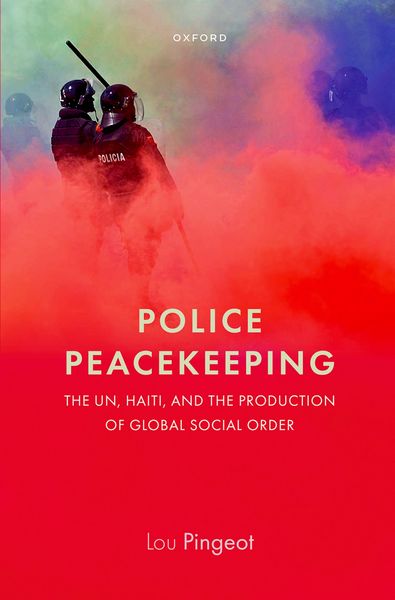
UN peace operations increasingly deploy police forces and engage in policing tasks. The turn to 'police peacekeeping' has generally been met with enthusiasm in both academic and policy circles, and is often understood to provide a more civilian instrument of intervention, better suited to mandates that increasingly emphasize protection. Rebuilding local police forces along democratic, liberal lines is seen as a prerequisite for a successful transition towards peace and stability. In this book, Lou Pingeot questions this optimistic reading of police peacekeeping, and demonstrates that the logic of policing leads to the depoliticization of conflict and the criminalization of those who are deemed to threaten not just public order but social order, authorizing violence against them in the name of law enforcement. Police Peacekeeping proposes a new way of studying peace operations that focuses not on their success or failure, but on how they allow people and ideas to circulate transnationally. It shows that peace operations act as a point of cross-fertilization for the creation and transmission of policing discourses and practices globally. In so doing, these missions contribute to (re)producing social orders that are based on the exclusion of often racialized, socio-economically marginalized populations, both 'domestically' (in countries of intervention) and 'internationally' (in troop contributing countries). The book draws on and contributes to critical understandings of police power that show that police forces were never meant to protect all equally. It also furthers our understanding of policing at a global level. Drawing on interpretive, feminist, and postcolonial methodologies that emphasize relations, processes, and situatedness, Lou Pingeot's in-depth study of UN intervention in Haiti shows how a single site can help illuminate global processes. Rather than starting from Haiti's supposed deviance from international expectations and norms, she posits that Haiti can reveal a great deal about how policing functions globally.
Kundinnen und Kunden meinen
Verfassen Sie die erste Bewertung zu diesem Artikel
Helfen Sie anderen Kund*innen durch Ihre Meinung