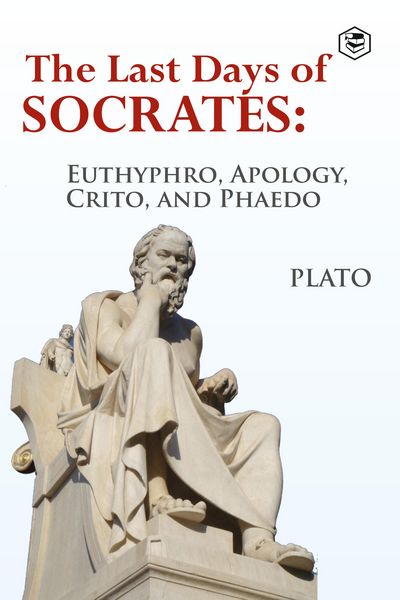
The Last Days of Socrates: Euthyphro, Apology, Crito and Phaedo
-
- Einzelkauf Download ausgewählt
-
Sprache:Englisch
Fr. 1.90
inkl. gesetzl. MwSt.Beschreibung
Produktdetails
Format
ePUB
Kopierschutz
Ja
Family Sharing
Nein
Text-to-Speech
Ja
Erscheinungsdatum
26.06.2023
Verlag
Sanage Publishing HouseSeitenzahl
(Printausgabe)
Dateigröße
408 KB
Sprache
Englisch
EAN
9788119216833
Nothing can harm a good man either in life or after death'
With reference to the trial and death of Socrates, there are four dialogs that are especially relevant. They are the Euthyphro, the Apology, the Crito, and the Phaedo.
In the Euthyphro, an attempt is made to answer the question "What is piety?" It has a particular bearing on the trial of Socrates, for he had been accused of impiety and was about to be tried for a crime, the nature of which no one seemed to understand.
The Apology contains an account of Socrates' defense of himself after he had been charged with being a corrupter of the youth and one who refuses to accept the popular beliefs concerning the gods of the city of Athens. It is generally regarded as the most authentic account on record of what Socrates actually said as he appeared before his judges.
The Crito is an account of the conversation that takes place in the jail where Socrates is confined awaiting his execution. He is visited by Crito, an aged and trusted friend, who has come to the prison for the purpose of trying to persuade Socrates to avoid being put to death either by an escape from the prison where he is being held or by employing some other means. The dialog depicts Socrates as a man who has no fear of death and one who would rather die than commit an act that he believes to be morally wrong.
The Phaedo is a narrative concerning the last hours in the life of Socrates. After an interval of years, the story is related to Echecrates by Phaedo, who was one of Socrates' beloved disciples. The narration takes place at Phlius, which is the home of Phaedo. The scene of the story is the prison where Socrates is held. Phaedo is one of a number of friends who have gathered for their last meeting with Socrates. Much of the discussion that takes place has to do with Socrates' attitude toward death, including his reasons for believing in the immortality of the soul.
With reference to the trial and death of Socrates, there are four dialogs that are especially relevant. They are the Euthyphro, the Apology, the Crito, and the Phaedo.
In the Euthyphro, an attempt is made to answer the question "What is piety?" It has a particular bearing on the trial of Socrates, for he had been accused of impiety and was about to be tried for a crime, the nature of which no one seemed to understand.
The Apology contains an account of Socrates' defense of himself after he had been charged with being a corrupter of the youth and one who refuses to accept the popular beliefs concerning the gods of the city of Athens. It is generally regarded as the most authentic account on record of what Socrates actually said as he appeared before his judges.
The Crito is an account of the conversation that takes place in the jail where Socrates is confined awaiting his execution. He is visited by Crito, an aged and trusted friend, who has come to the prison for the purpose of trying to persuade Socrates to avoid being put to death either by an escape from the prison where he is being held or by employing some other means. The dialog depicts Socrates as a man who has no fear of death and one who would rather die than commit an act that he believes to be morally wrong.
The Phaedo is a narrative concerning the last hours in the life of Socrates. After an interval of years, the story is related to Echecrates by Phaedo, who was one of Socrates' beloved disciples. The narration takes place at Phlius, which is the home of Phaedo. The scene of the story is the prison where Socrates is held. Phaedo is one of a number of friends who have gathered for their last meeting with Socrates. Much of the discussion that takes place has to do with Socrates' attitude toward death, including his reasons for believing in the immortality of the soul.
Noch keine Bewertungen vorhanden
Verfassen Sie die erste Bewertung zu diesem Artikel
Helfen Sie anderen Kundinnen und Kunden durch Ihre Meinung.