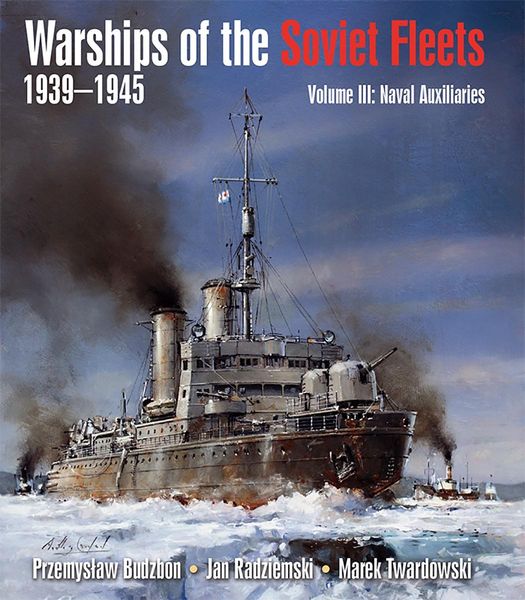
Warships of the Soviet Fleets, 1939-1945
-
- Einzelkauf Download ausgewählt
-
Sprache:Englisch
-
eBook Format:ePUB
- PDF Fr. 33.90
- ePUB Fr. 36.90 ausgewählt
-
Verlag:Pen And Sword
- Pen & Sword Fr. 33.90
- Pen And Sword Fr. 36.90 ausgewählt
Fr. 36.90
inkl. gesetzl. MwSt.Beschreibung
Produktdetails
Format
ePUB
Kopierschutz
Ja
Family Sharing
Ja
Text-to-Speech
Ja
Erscheinungsdatum
30.07.2023
Verlag
Pen And SwordSeitenzahl
320 (Printausgabe)
Dateigröße
75554 KB
Sprache
Englisch
EAN
9781399022828
Seventy-five years after the end of the Second World War the details of Soviet ships, their activities and fates remain an enigma to the West. In wartime such information was classified and after a brief period of glasnost ('openness') the Russian state has again restricted access to historical archives. Therefore, the value - and originality - of this work is difficult to exaggerate. It sees the first publication of reliable data on both the seagoing fleets and riverine flotillas of the Soviet Navy, listing over 6200 vessels from battleships to river gunboats, and mercantile conversions as well as purpose-built warships.
This third and final part of the series includes all the ships in naval service that were not frontline fighting vessels. Despite auxiliary status, these were not insignificant ships - indeed the icebreakers were the largest vessels built by the USSR before the war and carried so much prestige that every leading member of the Soviet regime wanted their name on one. Apart from the obvious fleet support types - oilers, tugs and depot ships - this volume also covers unsung heroes like the salvage fleet, highly significant in the 1930s for generating much-needed foreign currency and later essential to the war effort, allowing so many sunken Soviet warships to be returned to service. Another major feature of this volume is the first clear and comprehensive listing of ex-mercantile transport ships, their periods of service and ultimate fates. Even harbor service craft are included, right down to the humble 'heaters' that supplied warmth to icebound warships in the depth of the Russian winters.
This volume concludes with a number of important appendices on subjects like weaponry and a massive cross-referenced index that will allow readers to differentiate between ships of the same name and to track every name change.
This is undoubtedly one of the most important naval reference works of recent years and will be welcomed by anyone with an interest in warships, the Soviet Navy or wider maritime aspects of the Second World War. Furthermore, as recent Russian actions appear to revive Soviet-era aspirations, this book offers both new insights and valuable background of contemporary relevance.
This third and final part of the series includes all the ships in naval service that were not frontline fighting vessels. Despite auxiliary status, these were not insignificant ships - indeed the icebreakers were the largest vessels built by the USSR before the war and carried so much prestige that every leading member of the Soviet regime wanted their name on one. Apart from the obvious fleet support types - oilers, tugs and depot ships - this volume also covers unsung heroes like the salvage fleet, highly significant in the 1930s for generating much-needed foreign currency and later essential to the war effort, allowing so many sunken Soviet warships to be returned to service. Another major feature of this volume is the first clear and comprehensive listing of ex-mercantile transport ships, their periods of service and ultimate fates. Even harbor service craft are included, right down to the humble 'heaters' that supplied warmth to icebound warships in the depth of the Russian winters.
This volume concludes with a number of important appendices on subjects like weaponry and a massive cross-referenced index that will allow readers to differentiate between ships of the same name and to track every name change.
This is undoubtedly one of the most important naval reference works of recent years and will be welcomed by anyone with an interest in warships, the Soviet Navy or wider maritime aspects of the Second World War. Furthermore, as recent Russian actions appear to revive Soviet-era aspirations, this book offers both new insights and valuable background of contemporary relevance.
Kundinnen und Kunden meinen
Verfassen Sie die erste Bewertung zu diesem Artikel
Helfen Sie anderen Kund*innen durch Ihre Meinung