Gutscheinbedingungen

*Gültig bis 07.06.2026 auf (fast) alles. Ausgeschlossen sind Smartboxen, Zeitschriften, Tickets, Lebensmittel, Gaming-Elektroartikel, Tinte/Toner, Gutscheine, Geschenkkarten, Blumen und Abos | Einlösbar in allen Buchhandlungen von Orell Füssli, Barth Bücher, Buchladen Rapunzel, Schuler Orell Füssli, Stauffacher und ZAP unter Vorweisung des Gutscheins, auf www.orellfüssli.ch durch Eingabe des Gutscheincodes. Beim Service „eBooks verschenken“ und bei eBook-Käufen via eReader nicht einlösbar | Mindesteinkaufswert: Fr. 100.- | Nicht mit anderen Rabatten kumulierbar.

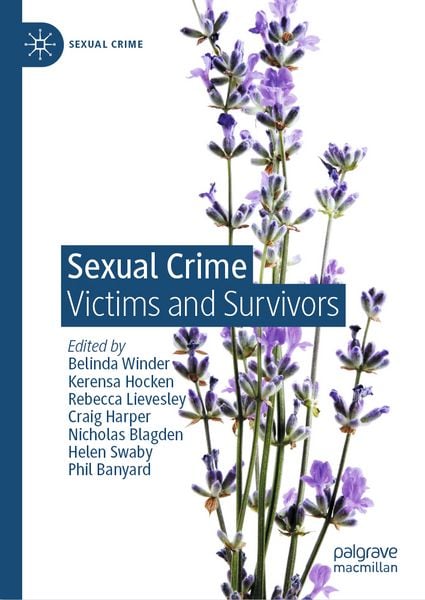
Produktbild: Sexual Crime

Sexual Crime Victims and Survivors

Aus der Reihe Sexual Crime

Fr. 191.00

inkl. gesetzl. MwSt., Versandkostenfrei


Beschreibung

Produktdetails

Einband

Gebundene Ausgabe

Erscheinungsdatum

02.05.2024

Herausgeber

Belinda Winder + weitere

Verlag

Springer

Seitenzahl

269

Maße (L/B/H)

21.6/15.3/2.1 cm

Gewicht

496 g

Sprache

Englisch

ISBN

978-3-031-46625-0

Beschreibung

Portrait

Professor Belinda Winder is the Research Director of the Centre for Crime, Offending, Prevention and Engagement at Nottingham Trent University. She is a co-founder of the Safer Living Foundation charity and has won numerous awards for her work to prevent sexual crime. 

Kerensa Hocken is a registered forensic psychologist at HMPPS Whatton, UK. She has oversight for the assessment and treatment of people in prison for sexual offending in the Midlands region. 

Dr. Rebecca Lievesley  is an Associate Professor in Psychology at Nottingham Trent University. Her research focuses on the prevention of sexual abuse, with key strands related to work with non-offending populations with self-identified paedophilia, and the evaluation of the use of medication to manage problematic sexual arousal for individuals convicted of a sexual offence. 

Dr. Craig Harper  is an Associate Professor in Psychology at Nottingham Trent University. His research interests lie in the psychological processes that underpin decision-making in relation to controversial social and political topics, such as how people form and express attitudes towards people with sexual convictions and atypical sexual interests and behaviours. 

Helen Swaby is a Senior Lecturer in Counselling  and Psychological Therapies at Nottingham Trent  University. She is a qualified integrative psychotherapist and has a background in forensic psychology research. 

Phil Banyard is an Emeritus Professor at Nottingham Trent University. He was honoured with the British Psychological Society’s Award for Distinguished Contributions to Psychology Education. 

Produktdetails

Einband

Gebundene Ausgabe

Erscheinungsdatum

02.05.2024

Herausgeber

Verlag

Springer

Seitenzahl

269

Maße (L/B/H)

21.6/15.3/2.1 cm

Gewicht

496 g

Sprache

Englisch

ISBN

978-3-031-46625-0

Herstelleradresse

Springer-Verlag GmbH
Tiergartenstr. 17
69121 Heidelberg
DE

Email: ProductSafety@springernature.com

Kundinnen und Kunden meinen

0 Bewertungen

Informationen zu Bewertungen

Zur Abgabe einer Bewertung ist eine Anmeldung im Konto notwendig. Die Authentizität der Bewertungen wird von uns nicht überprüft. Wir behalten uns vor, Bewertungstexte, die unseren Richtlinien widersprechen, entsprechend zu kürzen oder zu löschen.

Die Bewertungen sind nach Format, Anzahl Sterne und Datum sortiert.

Verfassen Sie die erste Bewertung zu diesem Artikel

Helfen Sie anderen Kund*innen durch Ihre Meinung

Kundinnen und Kunden meinen

0 Bewertungen filtern

  • Produktbild: Sexual Crime
  • Chapter 1: Lost, Gaslit, Belittled, Tormented: LGBT+ Experiences of Domestic and Sexual Abuse.- Chapter 2: Bringing survivor involvement into the mainstream.- Chapter 3: Sexual abuse, safeguarding and prevention in sport.- Chapter 4: Male Rape: Prevalence, consequences, and myths.- Chapter 5: Surviving Sexual Abuse cloaked in Spiritual Abuse.-Chapter 6: Preventing & Responding To Campus Sexual Abuse.- Chapter 7: The Voice of Dual Status.- Chapter 8: Circles of Support and Accountability: Restorative Outcomes for the Survivor Volunteer.- Chapter 9: ‘How could you be so stupid?’: Understanding the experience of partners of people who have been convicted of a sexual offence.- Chapter 10: Achieving a More Informed Understanding of Sexual Abuse through working with Perpetrators, as well as Survivors.