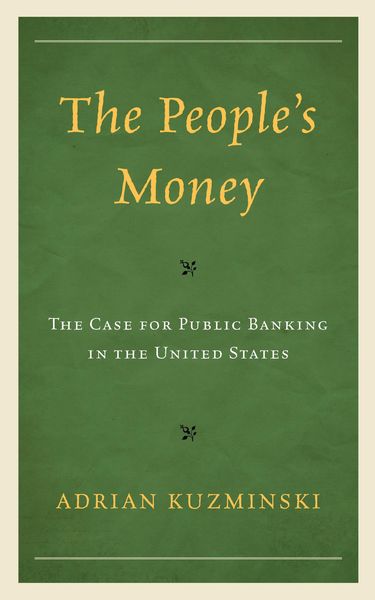
The People's Money The Case for Public Banking in the United States
-
Form:Einzelkauf Download
-
Sprache:Englisch
-
eBook Format:ePUB
- PDF Fr. 89.90
- ePUB Fr. 89.90 ausgewählt
Fr. 89.90
inkl. gesetzl. MwSt.Beschreibung
Produktdetails
Format
ePUB
Kopierschutz
Ja
Family Sharing
Nein
Text-to-Speech
Ja
Erscheinungsdatum
06.12.2023
Verlag
Bloomsbury eBooks USSeitenzahl
158 (Printausgabe)
Auflage
1. Auflage
Sprache
Englisch
EAN
9781666949025
The People's Money: The Case for Public Banking in the United States, offers a broad account and analysis of the most radical policy proposal of the populist movement: a new monetary currency issued by a public banking system. Nineteenth century American populists proposed a radical theory of sovereign money creation through public banking. Money would be issued as loans based on collateral to individuals at local public banks, much as it is created by private banks in the existing banking system. Public banking, however, would operate as a non-profit community service. Usurious rates would be replaced by 1% fixed interest, corresponding to the natural rate of resource depreciation over a lifetime. The populist idea of a natural rate of interest represents an intriguing confluence of ecological and monetary thinking.
The populists argued that democracy requires economic security that only property ownership can provide. In shifting the benefits of credit from lenders to borrowers, they aimed to promote widespread ownership of property. They opposed all monopolies of property, especially those of private finance. Unlike socialists, who favored collective control over production, populists sought to reform capitalism by widely distributing credit among individuals. With exorbitant rates of interest eliminated, borrowers would be freed of the servitude to creditors demanded by excessive interest rates. They would retain, perhaps for the first time in history, the full benefit of their loans for themselves and their families.
The populists argued that democracy requires economic security that only property ownership can provide. In shifting the benefits of credit from lenders to borrowers, they aimed to promote widespread ownership of property. They opposed all monopolies of property, especially those of private finance. Unlike socialists, who favored collective control over production, populists sought to reform capitalism by widely distributing credit among individuals. With exorbitant rates of interest eliminated, borrowers would be freed of the servitude to creditors demanded by excessive interest rates. They would retain, perhaps for the first time in history, the full benefit of their loans for themselves and their families.
Kundinnen und Kunden meinen
Verfassen Sie die erste Bewertung zu diesem Artikel
Helfen Sie anderen Kund*innen durch Ihre Meinung