Gutscheinbedingungen

*Gültig bis 07.06.2026 auf (fast) alles. Ausgeschlossen sind Smartboxen, Zeitschriften, Tickets, Lebensmittel, Gaming-Elektroartikel, Tinte/Toner, Gutscheine, Geschenkkarten, Blumen und Abos | Einlösbar in allen Buchhandlungen von Orell Füssli, Barth Bücher, Buchladen Rapunzel, Schuler Orell Füssli, Stauffacher und ZAP unter Vorweisung des Gutscheins, auf www.orellfüssli.ch durch Eingabe des Gutscheincodes. Beim Service „eBooks verschenken“ und bei eBook-Käufen via eReader nicht einlösbar | Mindesteinkaufswert: Fr. 100.- | Nicht mit anderen Rabatten kumulierbar.

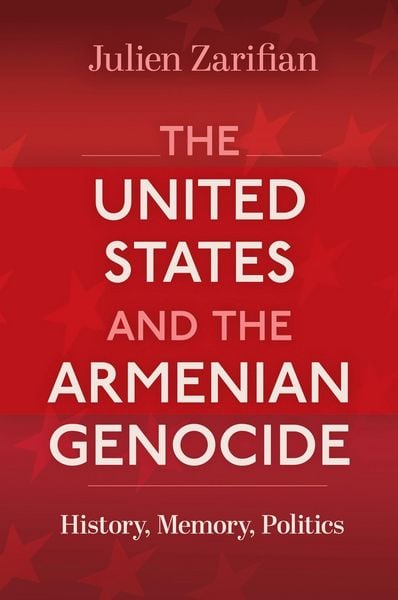
Produktbild: The United States and the Armenian Genocide

The United States and the Armenian Genocide History, Memory, Politics

Fr. 198.00

inkl. gesetzl. MwSt., Versandkostenfrei


Beschreibung

Produktdetails

Einband

Gebundene Ausgabe

Erscheinungsdatum

17.05.2024

Verlag

Rutgers University Press

Seitenzahl

324

Maße (L/B/H)

23.5/15.6/2.3 cm

Gewicht

472 g

Sprache

Englisch

ISBN

978-1-978837-93-5

Beschreibung

Produktdetails

Einband

Gebundene Ausgabe

Erscheinungsdatum

17.05.2024

Verlag

Rutgers University Press

Seitenzahl

324

Maße (L/B/H)

23.5/15.6/2.3 cm

Gewicht

472 g

Sprache

Englisch

ISBN

978-1-978837-93-5

Herstelleradresse

Libri GmbH
Europaallee 1
36244 Bad Hersfeld
DE

Email: gpsr@libri.de

Kundinnen und Kunden meinen

0 Bewertungen

Informationen zu Bewertungen

Zur Abgabe einer Bewertung ist eine Anmeldung im Konto notwendig. Die Authentizität der Bewertungen wird von uns nicht überprüft. Wir behalten uns vor, Bewertungstexte, die unseren Richtlinien widersprechen, entsprechend zu kürzen oder zu löschen.

Die Bewertungen sind nach Format, Anzahl Sterne und Datum sortiert.

Verfassen Sie die erste Bewertung zu diesem Artikel

Helfen Sie anderen Kund*innen durch Ihre Meinung

Kundinnen und Kunden meinen

0 Bewertungen filtern

  • Produktbild: The United States and the Armenian Genocide
  • Introduction

    Part I. The United States, the Armenians, and the Armenian Genocide before the Genocide Convention
    1. The United States and the Armenians Prior to the Genocide: The Emergence of Certain Bonds
    2. The United States and the Massacres of 1915
    3. From Hope to “Memory Erosion:” The United States and the Armenian Matter in the Interwar Period

    Part II. The United States and the Post-WWII Armenian Awakenings
    4. The United States and the Armenian Awakening of the Late 1940s
    5. The United States and the Armenian Awakening of 1965 
    6. The United States and Turkish-Armenian Extreme Polarization in the 1970s-1980s 

    Part III. The First Steps of a Decades-Long Struggle for Recognition of the Armenian Genocide by the U.S. Government (1970s/1980s)
    7. A Sinuous Road: The Matter of Recognition of the Armenian Genocide in the United Nations, at the White House, and in Congress in the 1970s
    8. Progress and Setbacks During the Reagan Administration
    9. A Case Both Emblematic and Unique: Bob Dole and Senate Joint Resolution 212 (1989-1990)

    Part IV. Intensification and Diversification of the Opposition Between the Pro- and the Anti-Recognition Factions (1990s/2000s)
    10. The Armenian Genocide and the U.S. Post-Cold War Context
    11. George W. Bush’s First Mandate: Between Turkish-Armenian Reconciliation Illusions and Armenian Efforts in Congress
    12. George W. Bush’s Second Mandate and the Difficult Progress of U.S. Recognition of the Genocide

    Part V. Toward Full Recognition of the Genocide: The Obama, Trump, and (Early) Biden Eras
    13. High Hopes and Immense Regrets: The Genocide (Non) Recognition during the Obama Era 
    14. Toward Full Recognition of the Genocide in Congress—Despite the Trump Administration’s Opposition  
    15. “Finishing the Job”: President Biden’s Historic Recognition of the Genocide  

    Part VI. Why It Took the United States Fifty Years to Recognize the Armenian Genocide  
    16. Turkey, Geopolitics and Nonrecognition of the Armenian Genocide by the United States
    17. The Nonrecognition of the Armenian Genocide: A Matter of Lobbying?
    18. The Armenian Genocide and Memory Issues in the United States

    Conclusion

    Notes
    Bibliography  
    Index