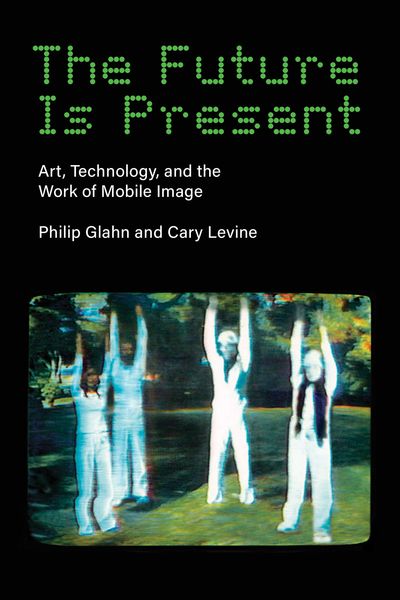
The Future Is Present Art, Technology, and the Work of Mobile Image
-
- Taschenbuch
- eBook ausgewählt
-
Form:Einzelkauf Download
-
Sprache:Englisch
Fr. 48.90
inkl. gesetzl. MwSt.Beschreibung
Produktdetails
Format
ePUB 3
Kopierschutz
Ja
Family Sharing
Ja
Text-to-Speech
Ja
Erscheinungsdatum
18.06.2024
Verlag
MIT PressSeitenzahl
336 (Printausgabe)
Dateigröße
71482 KB
Sprache
Englisch
EAN
9780262378734
A critical history of the pioneering art and technology group Mobile Image and their prescient work in communications, networking, and information systems.
In The Future Is Present, Philip Glahn and Cary Levine tell the fascinating history of the visionary art group Mobile Image-founded by Kit Galloway and Sherrie Rabinowitz in 1977-which appropriated emerging technologies, from satellites to electronic message platforms. Based in Los Angeles, this under-studied collective worked amid urban crisis, a techno-boom, consolidating media power, and ascendant neoliberal politics. Mobile Image challenged fundamental conventions of the public sphere, democracy, communication, and political participation, as well as notions of power, representation, and identity.
Glahn and Levine argue not only for the historical importance of Mobile Image, but also for a critical artistic process that is at once analytic and transformative. They weave themes such as embodiment and its mediation, public/private dialectics, and techno-utopian vision throughout the book, binding these projects to discourses around race, gender, and class, as well as margin and center, the local and the global. In today's world of ubiquitous digital re/production, networking, and social media, The Future Is Present shows how the work of Mobile Image continues to have profound implications for art, technology, and the politics of public and private experience.
In The Future Is Present, Philip Glahn and Cary Levine tell the fascinating history of the visionary art group Mobile Image-founded by Kit Galloway and Sherrie Rabinowitz in 1977-which appropriated emerging technologies, from satellites to electronic message platforms. Based in Los Angeles, this under-studied collective worked amid urban crisis, a techno-boom, consolidating media power, and ascendant neoliberal politics. Mobile Image challenged fundamental conventions of the public sphere, democracy, communication, and political participation, as well as notions of power, representation, and identity.
Glahn and Levine argue not only for the historical importance of Mobile Image, but also for a critical artistic process that is at once analytic and transformative. They weave themes such as embodiment and its mediation, public/private dialectics, and techno-utopian vision throughout the book, binding these projects to discourses around race, gender, and class, as well as margin and center, the local and the global. In today's world of ubiquitous digital re/production, networking, and social media, The Future Is Present shows how the work of Mobile Image continues to have profound implications for art, technology, and the politics of public and private experience.
Kundinnen und Kunden meinen
Verfassen Sie die erste Bewertung zu diesem Artikel
Helfen Sie anderen Kund*innen durch Ihre Meinung