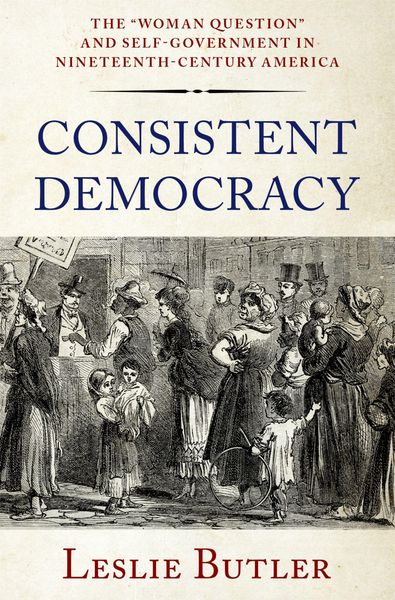
Consistent Democracy The "Woman Question" and Self-Government in Nineteenth-Century America
-
Form:Einzelkauf Download
-
Sprache:Englisch
-
eBook Format:PDF
- PDF Fr. 23.90 ausgewählt
- ePUB Fr. 23.90
Fr. 23.90
inkl. gesetzl. MwSt.Beschreibung
Produktdetails
Format
Kopierschutz
Ja
Family Sharing
Nein
Text-to-Speech
Nein
Erscheinungsdatum
06.10.2023
Verlag
OUP eBookSeitenzahl
(Printausgabe)
Dateigröße
36756 KB
Sprache
Englisch
EAN
9780197685853
What did it mean that in the world's first mass democracy only a minority ruled? Women--free and enslaved, white and Black, single and married--constituted the bulk of those barred from full self-government in nineteenth-century America. The seeming anomaly of this exclusion fostered basic questions about the possibilities and limits of popular rule during the decades of democracy's worldwide ascendancy. Consistent Democracy examines how these wide-ranging discussions about self-government and the so-called woman question developed in published opinion from the 1830s through the 1890s. Ranging beyond the organized women's rights movement, it places in conversation travel writers and domestic advice gurus, activists and educators, novelists and journalists, as well as countless others who explored contested aspects of democratic womanhood. Across the expansive world of print, these writers explored women's individual autonomy, their familial roles, and their participation in the polity with the franchise and without it. An array of theorists, reformers, and critics--including foreign observers Alexis de Tocqueville and Harriet Martineau, educator Catharine Beecher, political theorist John Stuart Mill, African American author and activist Frances Ellen Watkins Harper, and historian Francis Parkman--compelled Americans to assess and reassess their popular political ideas and assumptions against the backdrop of a turbulent century that witnessed the violent end of slavery. Combining intellectual, political, and cultural history, Consistent Democracy illuminates how--in the nineteenth century and since--woman questions were democracy questions.
Kundinnen und Kunden meinen
Verfassen Sie die erste Bewertung zu diesem Artikel
Helfen Sie anderen Kund*innen durch Ihre Meinung