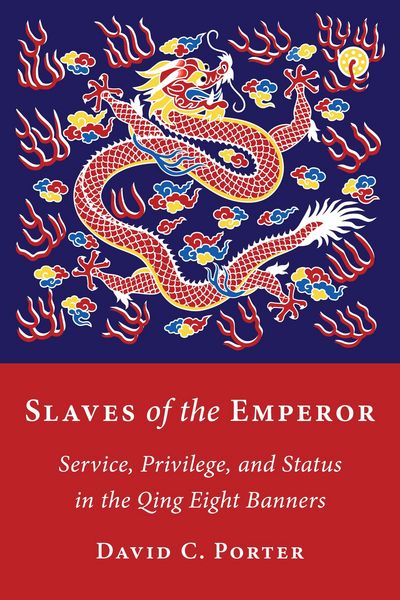
Slaves of the Emperor Service, Privilege, and Status in the Qing Eight Banners
-
- Hardcover
- Taschenbuch
- eBook ausgewählt
-
Form:Einzelkauf Download
-
Sprache:Englisch
Fr. 37.90
inkl. gesetzl. MwSt.Beschreibung
Produktdetails
Format
ePUB
Kopierschutz
Nein
Family Sharing
Nein
Text-to-Speech
Ja
Erscheinungsdatum
26.12.2023
Verlag
Columbia University PressSeitenzahl
352 (Printausgabe)
Sprache
Englisch
EAN
9780231559553
Honorable Mention, 2026 Joseph Levenson Prize (China, pre-1900), Association for Asian Studies
Shortlisted, 2024 Wallace K. Ferguson Prize, Canadian Historical Association
China's last imperial dynasty governed a vast and culturally diverse territory, encompassing a wide range of local political systems and regional elites. But the Qing empire was built and held together by a single imperial elite: the more than two million members of the hereditary Eight Banner system who were at the core of both the military and the bureaucracy. The banner population was multiethnic, linked by shared membership in a clearly demarcated status group defined in law and administrative practice. Banner people were bound to the court by an exchange of loyal service for institutionalized privilege, a relationship symbolically conceptualized as one of slave to master.
Slaves of the Emperor explores the Qing approach to one of the fundamental challenges of early modern state-building: how to develop an effective bureaucracy with increasing administrative capacity to govern a growing polity while retaining the loyalty of the ruling family's most important supporters. David C. Porter traces how the banner system created a service elite through its processes of incorporating new members, its employment of bannermen as technical specialists, its imposition of service obligations on women as well as men, and its response to fiscal and ideological challenges. Placing Qing practices in comparative perspective, he uncovers crucial parallels to similar institutions in Tokugawa Japan, imperial Russia, and the Ottoman Empire. Slaves of the Emperor provides a new framework for understanding the structure and function of elites both in China and across Eurasia in the early modern period.
Kundinnen und Kunden meinen
Verfassen Sie die erste Bewertung zu diesem Artikel
Helfen Sie anderen Kund*innen durch Ihre Meinung