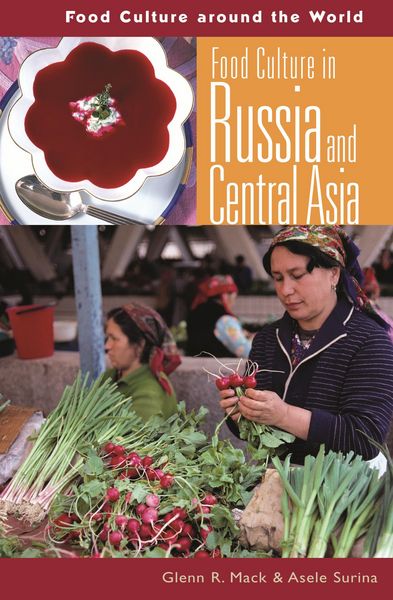
Food Culture in Russia and Central Asia
-
Form:Einzelkauf Download
-
Sprache:Englisch
-
eBook Format:ePUB
- PDF Fr. 60.90
- ePUB Fr. 61.90 ausgewählt
Fr. 61.90
inkl. gesetzl. MwSt.Beschreibung
Produktdetails
Format
ePUB
Kopierschutz
Ja
Family Sharing
Nein
Text-to-Speech
Ja
Altersempfehlung
ab 7 Jahr(e)
Erscheinungsdatum
30.06.2005
Verlag
Bloomsbury eBooks USSeitenzahl
260 (Printausgabe)
Dateigröße
6637 KB
Sprache
Englisch
EAN
9798216085645
Russia and the newly independent states of Central Asia are struggling to reassert or create national identities and are receiving fresh attention from the West. After decades of oblivion, the vast Eurasian continent is once again divulging its intense cultural heritage and foodways to the international community. The diversity of food cultures within the former Soviet Union, with more than 100 distinct nationalities, is overwhelming, but this book brilliantly distills the main elements of contemporary cuisine and food-related customs for students and foodies. Vibrant descriptions of the legacy of the Silk Road; the classic foods such as kasha, pirogi, non (flatbread), pickles, and shashlyk (shish kebab); the over-the-top Moscow theme restaurants; and meals at the dacha and tea time are just some of the highlights.
Russia and the newly independent states of Central Asia are struggling to reassert or create national identities and are receiving fresh attention from the West. After decades of oblivion, the vast Eurasian continent is once again divulging its intense cultural heritage and foodways to the international community. The diversity of food cultures within the former Soviet Union, with more than 100 distinct nationalities, is overwhelming, but Food Culture in Russia and Central Asia brilliantly distills the main elements of contemporary cuisine and food-related customs for students and foodies. Vibrant descriptions of the legacy of the Silk Road; the classic foods such as kasha, pirogi, non (flatbread), pickles, and shashlyk (shish kebab); the over-the-top Moscow theme restaurants; and meals at the dacha and tea time are just some of the highlights.
After centuries of contact and conflict among peoples of Eurasia, Russian and Central Asian cuisines and culinary cultures have much in common. To understand one, the other must be considered as well. Russia and Central Asia cuisines share many ingredients, dishes, and customs. This volume strives to emphasize the evolving and multifaceted nature of the food cultures. Readers will be able to appreciate the ingredients, cooking methods, and traditions that make up the Eurasian foodways.
Russia and the newly independent states of Central Asia are struggling to reassert or create national identities and are receiving fresh attention from the West. After decades of oblivion, the vast Eurasian continent is once again divulging its intense cultural heritage and foodways to the international community. The diversity of food cultures within the former Soviet Union, with more than 100 distinct nationalities, is overwhelming, but Food Culture in Russia and Central Asia brilliantly distills the main elements of contemporary cuisine and food-related customs for students and foodies. Vibrant descriptions of the legacy of the Silk Road; the classic foods such as kasha, pirogi, non (flatbread), pickles, and shashlyk (shish kebab); the over-the-top Moscow theme restaurants; and meals at the dacha and tea time are just some of the highlights.
After centuries of contact and conflict among peoples of Eurasia, Russian and Central Asian cuisines and culinary cultures have much in common. To understand one, the other must be considered as well. Russia and Central Asia cuisines share many ingredients, dishes, and customs. This volume strives to emphasize the evolving and multifaceted nature of the food cultures. Readers will be able to appreciate the ingredients, cooking methods, and traditions that make up the Eurasian foodways.
Kundinnen und Kunden meinen
Verfassen Sie die erste Bewertung zu diesem Artikel
Helfen Sie anderen Kund*innen durch Ihre Meinung