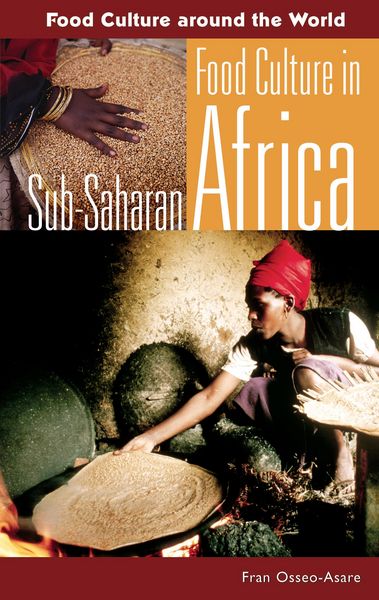
Food Culture in Sub-Saharan Africa
Fr. 60.90
inkl. gesetzl. MwSt.Beschreibung
Produktdetails
Format
Kopierschutz
Ja
Family Sharing
Nein
Text-to-Speech
Nein
Altersempfehlung
ab 7 Jahr(e)
Erscheinungsdatum
30.06.2005
Verlag
Bloomsbury eBooks USSeitenzahl
224 (Printausgabe)
Dateigröße
6539 KB
Sprache
Englisch
EAN
9780313062261
East African, notably, Ethiopian, cuisine is perhaps the most well-known in the States. This volume illuminates West, southern, and Central African cuisine as well to give students and other readers a solid understanding of how the diverse African peoples grow, cook, and eat food and how they celebrate special occasions and ceremonies with special foods. Readers will also learn about African history, religions, and ways of life plus how African and American foodways are related. For example, cooking techniques such as deep frying and ingredients such as peanuts, chili peppers, okra, watermelon, and even cola were introduced to the United States by sub-Sahara Africans who were brought as slaves.
Africa is often presented as a monolith, but this volume treats each region in turn with representative groups and foodways presented in manageable fashion, with a truer picture able to emerge. It is noted that the boundaries of many countries are imposed, so that food culture is more fluid in a region. Commonalities are also presented in the basic format of a meal, with a starch with a sauce or stew and vegetables and perhaps some protein, typically cooked over a fire in a pot supported by three stones. Representative recipes, a timeline, glossary, and evocative photos complete the narrative.
Africa is often presented as a monolith, but this volume treats each region in turn with representative groups and foodways presented in manageable fashion, with a truer picture able to emerge. It is noted that the boundaries of many countries are imposed, so that food culture is more fluid in a region. Commonalities are also presented in the basic format of a meal, with a starch with a sauce or stew and vegetables and perhaps some protein, typically cooked over a fire in a pot supported by three stones. Representative recipes, a timeline, glossary, and evocative photos complete the narrative.
Kundinnen und Kunden meinen
Verfassen Sie die erste Bewertung zu diesem Artikel
Helfen Sie anderen Kund*innen durch Ihre Meinung