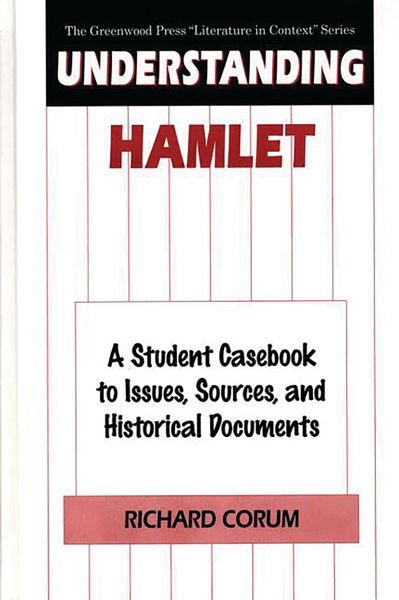
Understanding Hamlet A Student Casebook to Issues, Sources, and Historical Documents
Fr. 61.90
inkl. gesetzl. MwSt.Beschreibung
Produktdetails
Format
Kopierschutz
Ja
Family Sharing
Nein
Text-to-Speech
Nein
Altersempfehlung
ab 7 Jahr(e)
Erscheinungsdatum
28.10.1998
Verlag
Bloomsbury eBooks USSeitenzahl
296 (Printausgabe)
Dateigröße
3443 KB
Sprache
Englisch
EAN
9780313007781
Shakespeare's Hamlet, regarded by many as the world's most famous play by the world's most famous writer, is one of the most complex, demanding, discussed, and influential literary texts in English. As a means of access to this play, this unique collection of primary materials and commentary will help student and teacher explore historical, literary, theatrical, social, and cultural issues related to the play. In an approach unique for this series, Corum guides the reader through a literary analysis of Hamlet's options. He examines the popular theatres of the day in which Shakespeare and his company first produced Hamlet and discusses the genre of tragedy in which it is written. Through judicious selection of primary historical documents, the work provides contexts for understanding Hamlet's melancholy, the ghost of Hamlet's father, the theme of revenge, and Hamlet's feigned madness. Chapters on Gertrude and Ophelia illuminate these characters in the context of the play and early modern English culture.
Each chapter contains a variety of materials, many of which are not readily available elsewhere: essays, poems, histories, treatises, official documents, stories, religious tracts, homilies, memoirs, engravings, village records, and fifteen illustrations. An explanatory introduction precedes each document. Each chapter concludes with study questions, topics for written and oral exploration, and a list of suggested readings. This casebook will enrich the reader's understanding of the play and the context in which it was written.
Each chapter contains a variety of materials, many of which are not readily available elsewhere: essays, poems, histories, treatises, official documents, stories, religious tracts, homilies, memoirs, engravings, village records, and fifteen illustrations. An explanatory introduction precedes each document. Each chapter concludes with study questions, topics for written and oral exploration, and a list of suggested readings. This casebook will enrich the reader's understanding of the play and the context in which it was written.
Kundinnen und Kunden meinen
Verfassen Sie die erste Bewertung zu diesem Artikel
Helfen Sie anderen Kund*innen durch Ihre Meinung