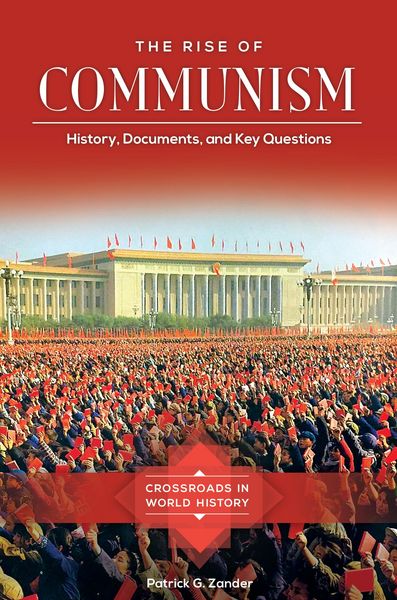
The Rise of Communism History, Documents, and Key Questions
-
Form:Einzelkauf Download
-
Sprache:Englisch
-
eBook Format:PDF
- PDF Fr. 67.90 ausgewählt
- ePUB Fr. 67.90
Fr. 67.90
inkl. gesetzl. MwSt.Beschreibung
Produktdetails
Format
Kopierschutz
Ja
Family Sharing
Nein
Text-to-Speech
Nein
Altersempfehlung
ab 7 Jahr(e)
Erscheinungsdatum
16.02.2018
Verlag
Bloomsbury eBooks USSeitenzahl
256 (Printausgabe)
Dateigröße
1579 KB
Sprache
Englisch
EAN
9781440847066
This book investigates the Communist political phenomenon, including the origins and development of Communism as well as the revolutions that led to the rise of the major Communist states around the world.
Written for high school students, undergraduates, and general readers, this book surveys the global rise of Communism. It begins with a timeline and narrative overview, which are followed by reference entries, primary source documents, and original argumentative essays on enduring issues related to Communism.
The book first covers the earliest phases of the "Utopian Socialist" movement and the beginnings of Marxist theory. It then discusses the Russian Revolution of 1917; the creation of the Soviet Union; the regime of terror instituted by Stalin; the expansion of Communism during the years of the Cold War, particularly in Asia; and the Cuban Revolution and the regime of Fidel Castro. It also discusses the progression toward revolution among the European Satellite countries as it included the Hungarian Revolution of 1956, the Czech revolution of 1968, and the multiple revolutions from 1989-1991 that saw the collapse of the Soviet system and the Cold War.
Written for high school students, undergraduates, and general readers, this book surveys the global rise of Communism. It begins with a timeline and narrative overview, which are followed by reference entries, primary source documents, and original argumentative essays on enduring issues related to Communism.
The book first covers the earliest phases of the "Utopian Socialist" movement and the beginnings of Marxist theory. It then discusses the Russian Revolution of 1917; the creation of the Soviet Union; the regime of terror instituted by Stalin; the expansion of Communism during the years of the Cold War, particularly in Asia; and the Cuban Revolution and the regime of Fidel Castro. It also discusses the progression toward revolution among the European Satellite countries as it included the Hungarian Revolution of 1956, the Czech revolution of 1968, and the multiple revolutions from 1989-1991 that saw the collapse of the Soviet system and the Cold War.
Kundinnen und Kunden meinen
Verfassen Sie die erste Bewertung zu diesem Artikel
Helfen Sie anderen Kund*innen durch Ihre Meinung